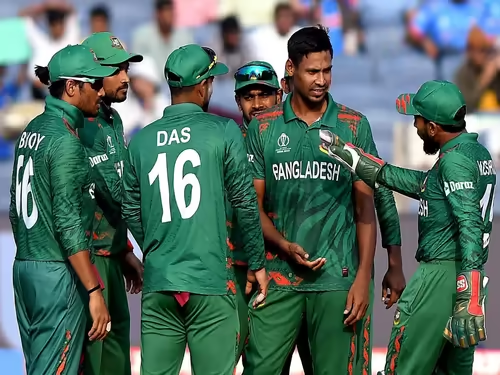
In a stunning turn of events that gripped the cricketing world, the Bangladesh cricket crisis has been defused just one day after it brought the nation’s premier T20 league to a standstill. On January 15, 2026, players across all BPL franchises unanimously boycotted matches following controversial comments made by Bangladesh Cricket Board (BCB) finance committee director Najmul Islam regarding former captain Tamim Iqbal and delayed player compensation. But by the evening of January 16, after intense negotiations and a formal apology from Islam—who was also stripped of his BCB role—the players agreed to return to action, saving the remainder of the BPL season from collapse .
Table of Contents
- What Sparked the Bangladesh Cricket Crisis?
- Player Boycott: Unprecedented Show of Unity
- Najmul Islam Apologises and Is Sacked
- Emergency Meeting with BCB and CWAB
- Impact on BPL 2025-26 Schedule
- Broader Implications for Bangladeshi Cricket
- Conclusion: A Watershed Moment
- Sources
What Sparked the Bangladesh Cricket Crisis?
The turmoil began when Najmul Islam, a senior BCB official and head of its finance committee, made disparaging remarks during a closed-door meeting that were later leaked to the media. According to multiple sources, Islam questioned why “retired players like Tamim Iqbal” should receive special financial considerations while active domestic cricketers faced payment delays. He reportedly added, “Let them earn like the rest of us,” referring to Tamim’s advisory role and stipend as part of BCB’s Cricket Development Committee .
Tamim Iqbal, Bangladesh’s all-time leading run-scorer and a revered figure in the sport, had recently stepped down from the national team but remained influential in shaping grassroots policy. His supporters—including current stars like Shakib Al Hasan and Mushfiqur Rahim—took deep offense at the comments, viewing them as both disrespectful and indicative of systemic mismanagement within the BCB.
Player Boycott: Unprecedented Show of Unity
Within hours, players from all seven BPL franchises announced they would not take the field until their demands were met. This collective action was historic—Bangladeshi cricketers have rarely, if ever, staged a unified protest against the board. Key demands included:
- Immediate removal of Najmul Islam from all BCB committees
- A public apology acknowledging the disrespect shown to Tamim Iqbal
- Clear timelines for pending domestic player payments
- Greater transparency in BCB’s financial decision-making
Matches scheduled for January 15—including high-profile fixtures like Dhaka Capitals vs. Chattogram Challengers—were postponed, throwing the league into chaos and raising fears of cancellation.
Najmul Islam Apologises and Is Sacked
Facing mounting pressure, the BCB acted swiftly. On the morning of January 16, Islam issued a written apology, stating: “I deeply regret my words, which were never intended to undermine Tamim Iqbal’s immense contribution to Bangladesh cricket. I offer my sincere apologies to him, the players, and the nation.” Shortly after, BCB President Nazmul Hassan Papon announced Islam’s immediate removal from the finance committee and all other board-related roles .
While some critics called the move performative, players accepted it as a necessary first step toward accountability.
Emergency Meeting with BCB and CWAB
A high-stakes meeting was convened at the Sher-e-Bangla National Stadium in Mirpur, attended by BCB officials, representatives from the Cricketers’ Welfare Association of Bangladesh (CWAB), and franchise captains. Sources confirm that CWAB played a pivotal mediating role, urging both sides to prioritize the sport’s future over personal grievances.
By late afternoon, an agreement was reached: the BCB committed to clearing all outstanding domestic payments by February 10, 2026, and pledged to form a joint player-board committee to review financial protocols. In return, players agreed to resume the BPL immediately.
Impact on BPL 2025-26 Schedule
The league will now continue with revised fixtures. The January 15 matches will be rescheduled for the final week of the tournament, with no changes to the playoff structure. Organizers confirmed that broadcast partners and sponsors—including title sponsor Walton—have expressed support for the resolution.
“The show must go on,” said BPL Governing Council Chairman Nizamuddin Chowdhury. “Today, Bangladesh cricket showed maturity.”
Broader Implications for Bangladeshi Cricket
This episode reveals deeper fissures within the BCB’s governance. For years, players have complained about opaque finances, delayed contracts, and political interference. The fact that they mobilized so quickly—and successfully—signals a new era of player empowerment in Bangladesh, mirroring trends seen in South Africa and the West Indies .
Moreover, it underscores Tamim Iqbal’s enduring influence. Even in retirement, his stature remains untouchable—a testament to his legacy and the respect he commands across generations.
Conclusion: A Watershed Moment
The Bangladesh cricket crisis may have lasted only 24 hours, but its impact will be long-lasting. It proved that players, when united, can hold even powerful boards accountable. More importantly, it reminded everyone that cricket in Bangladesh isn’t just a sport—it’s a national passion that thrives only when built on mutual respect. As the BPL resumes, fans can breathe easy—but the BCB would do well to remember: the next boycott might not end so quickly. For more on governance reforms in global cricket, see our analysis on [INTERNAL_LINK:cricket-board-accountability-worldwide].
Sources
- The Times of India. “Cricket to resume after day-long drama in Bangladesh as sacked BCB director apologises.” January 16, 2026.
- ESPNcricinfo. “Bangladesh Players Boycott BPL Over BCB Official’s Remarks.” January 15, 2026.
- Bangladesh Cricket Board (Official Statement). “Update on BPL 2025-26 and Administrative Changes.” bcb.org.bd, January 16, 2026.
- International Cricket Council (ICC). “Best Practices in Player-Board Relations.” icc-cricket.com.