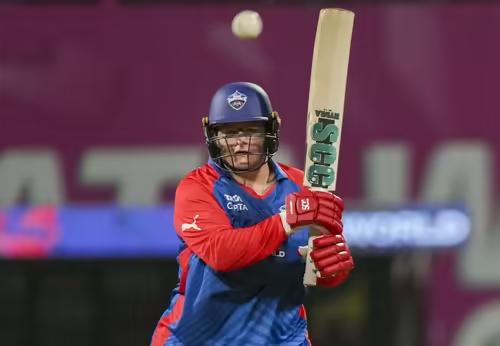
Emotions ran high in the high-stakes clash between Delhi Capitals and Mumbai Indians in the Women’s Premier League (WPL) 2026—and it cost South African batter Lizelle Lee dearly. Following her controversial dismissal in a tense chase, Lee was found guilty of a WPL Code of Conduct breach, resulting in a significant fine and a formal demerit point .
While Delhi Capitals went on to win the match by seven wickets—keeping their playoff hopes very much alive—the incident has sparked conversations about player discipline, the pressure of high-stakes T20 cricket, and how governing bodies enforce behavioral standards in women’s sport. Let’s unpack exactly what happened, why it matters, and what it could mean for Lee and the league moving forward.
Table of Contents
- What Happened? The Lizelle Lee Incident Explained
- Understanding the WPL Code of Conduct Breach
- The Penalty Breakdown: Fine and Demerit Points
- Match Context: Why the Moment Was So Charged
- Broader Implications for WPL and Women’s Cricket
What Happened? The Lizelle Lee Incident Explained
The incident occurred during Delhi Capitals’ chase of 155 against arch-rivals Mumbai Indians. Lee, who had looked in sublime touch while scoring a rapid 46, was adjudged stumped off the bowling of Saika Ishaque. Replays suggested the decision was extremely tight—possibly debatable—but the third umpire upheld it .
Frustrated by the dismissal at a critical juncture, Lee vented her anger by striking her bat against the ground—a clear act of abusing cricket equipment. Match referee Shivani Mishra, acting under the WPL’s disciplinary framework, charged Lee with a Level 1 offence under the league’s Code of Conduct . Lee admitted the charge and accepted the sanction without contesting it.
Understanding the WPL Code of Conduct Breach
The WPL Code of Conduct breach system is modeled closely on the ICC’s global standards but tailored for the league environment. It categorizes offences into four levels, with Level 1 being the least severe and Level 4 the most serious (e.g., threatening behavior or match-fixing).
A Level 1 offence typically includes actions like:
- Showing dissent at an umpire’s decision
- Using obscene language
- Abusing cricket equipment (Lee’s specific violation)
- Excessive appealing
According to the official WPL Playing Conditions for 2026, such breaches are meant to uphold the “spirit of cricket” while acknowledging that players are human and emotions can flare in competitive settings . However, consistent enforcement sends a message that professionalism is non-negotiable—even in the heat of the moment.
The Penalty Breakdown: Fine and Demerit Points
For her Level 1 offence, Lizelle Lee received two sanctions:
- A fine of 10% of her match fee – While the exact match fee for WPL 2026 isn’t public, reports suggest top-tier players earn between ₹30–50 lakh per season . A single match fee could be around ₹1.5–2.5 lakh, meaning Lee’s fine likely ranged from ₹15,000 to ₹25,000.
- One demerit point – Accumulating four demerit points within a 24-month period leads to a suspension. This is Lee’s first, so immediate consequences are limited—but it’s now on her record.
For context, similar penalties have been applied in men’s leagues like the IPL. In 2023, Hardik Pandya was fined 10% of his match fee for equipment abuse after being dismissed in a high-pressure game . This shows the WPL is aligning its disciplinary rigor with established global norms.
Match Context: Why the Moment Was So Charged
It’s easy to judge from the stands—but context matters. Delhi Capitals entered this match needing a win to stay in contention for the playoffs. Lee’s 46 off just 32 balls had put them firmly in control. Her dismissal, especially if perceived as unjust, represented a massive momentum shift.
Thankfully for Delhi, Jemimah Rodrigues stepped up with an unbeaten 51 to seal a clinical seven-wicket victory . But in that split second after the stumpings, Lee’s frustration was raw and unfiltered—a reminder that even elite athletes are vulnerable to emotion under pressure.
Broader Implications for WPL and Women’s Cricket
This incident is more than just a fine—it’s a milestone in the maturation of the WPL. As the league gains global viewership and commercial value, consistent enforcement of conduct rules becomes essential to its credibility.
On one hand, fans appreciate passion. On the other, governing bodies must ensure the game remains respectful and safe. The BCCI’s swift action demonstrates its commitment to treating the WPL with the same seriousness as the men’s IPL—a positive sign for the future of women’s cricket worldwide.
For players like Lee, it’s a learning moment. And for fans, it’s a chance to reflect: should we expect robotic composure, or is a bit of fiery emotion part of what makes sport compelling? You can explore more about player psychology in high-pressure games in our feature on [INTERNAL_LINK:mental-resilience-in-t20-cricket].
The Bottom Line
Lizelle Lee’s WPL Code of Conduct breach was a brief but telling moment in an otherwise triumphant match for Delhi Capitals. While the fine is modest, the precedent matters. As the WPL continues to grow, such incidents—and how they’re handled—will shape the league’s identity, balancing competitive fire with professional decorum.
Sources
- Times of India. “WPL: Lizelle Lee slapped with heavy fine for Code of Conduct breach.” January 21, 2026.
- BCCI. “WPL 2026 Playing Conditions & Code of Conduct.” Official Document.
- Economic Times. “Inside the WPL 2026 salary structure: How much do players really earn?” February 2025.
- ESPNcricinfo. “Hardik Pandya fined for equipment abuse in IPL 2023.” May 2023.
- International Cricket Council (ICC). “Code of Conduct for Players and Support Personnel.” https://www.icc-cricket.com