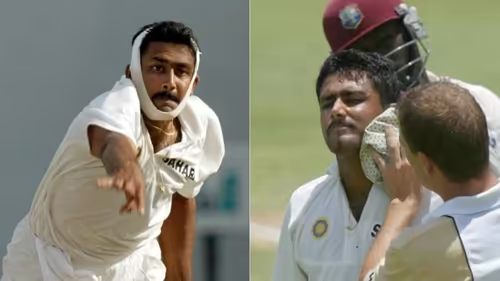
Cricket is often called a gentleman’s game—but sometimes, it demands the heart of a warrior. Few matches embody that truth more than the **2002 Antigua Test** between India and the West Indies. Played at the historic Sir Vivian Richards Stadium, this match is remembered not for a dramatic win or a record chase, but for raw courage, bizarre tactics, and a moment so visceral it left blood on the pitch. It was here that captain Sourav Ganguly made the rare decision to use all eleven Indian players as bowlers in a single innings—a move born not of strategy, but of sheer desperation and injury.
Table of Contents
- The Day Anil Kumble Bowled with a Broken Jaw
- Why Ganguly Used All 11 Bowlers in the 2002 Antigua Test
- Ajay Ratra Makes History as Youngest Keeper to Score a Century
- The Full List of India’s 11 Bowlers in That Innings
- How the Match Unfolded: A Tactical Nightmare
- Legacy of the 2002 Antigua Test: Why It Still Matters
- Conclusion
- Sources
The Day Anil Kumble Bowled with a Broken Jaw
The defining image of the **2002 Antigua Test** is etched in cricket folklore: Anil Kumble, face swollen and blood trickling from his mouth, trudging back to his mark to bowl another over. The injury occurred on Day 3 when a brutal bouncer from Mervyn Dillon struck him flush on the jaw during India’s first innings. Medical staff rushed to the crease, and many expected him to retire hurt.
But Kumble refused. With his jaw likely fractured, he returned later in the match to bowl 14 overs in West Indies’ second innings—delivering with immense pain and limited mobility. His final figures were modest (0/69), but his courage became legendary. As former teammate VVS Laxman recalled, “That was the spirit of that team under Ganguly—never say die, no matter the cost” .
Why Ganguly Used All 11 Bowlers in the 2002 Antigua Test
Faced with a decimated bowling attack—Kumble injured, Zaheer Khan struggling with fitness, and Ashish Nehra already out of the match—Ganguly had no choice but to get creative. Needing to break a stubborn West Indies partnership in their second innings, he turned to every available option, including non-bowlers like Sachin Tendulkar, Rahul Dravid, VVS Laxman, and even wicketkeeper Ajay Ratra.
This marked only the **third time in Test history** that all eleven players from a side bowled in a single innings—and the first for India. It wasn’t a gimmick; it was a survival tactic in a high-stakes series where India was fighting to retain its No. 1 ranking.
Ajay Ratra Makes History as Youngest Keeper to Score a Century
Amid the chaos, there was also glory. In India’s first innings, 20-year-old debutant wicketkeeper Ajay Ratra smashed a fearless 115*—becoming the youngest wicketkeeper in history to score a Test century at the time, a record later broken by Pakistan’s Mohammad Rizwan . His knock, filled with elegant drives and powerful pulls, gave India a fighting total of 404 and showcased the fearless brand of cricket Ganguly’s “Young Turks” were known for.
The Full List of India’s 11 Bowlers in That Innings
Here’s the complete lineup of Indian bowlers who delivered at least one over in West Indies’ second innings:
- Anil Kumble
- Harbhajan Singh
- Ashish Nehra
- Zaheer Khan
- Sachin Tendulkar
- VVS Laxman
- Rahul Dravid
- Virender Sehwag
- Wasim Jaffer
- Ajay Ratra (wicketkeeper)
- Sourav Ganguly (captain)
Notably, even specialist batsmen like Dravid and Laxman—who rarely bowled—were pressed into service. Ganguly himself sent down three overs, conceding just 10 runs. It was a masterclass in resourcefulness under extreme duress.
How the Match Unfolded: A Tactical Nightmare
After Ratra’s century and half-centuries from Sehwag and Dravid, India posted 404. West Indies replied with 373, thanks to Brian Lara’s 83 and Ramnaresh Sarwan’s 72. In the second innings, India collapsed to 173 all out, setting the hosts a target of 205.
With Shivnarine Chanderpaul and Sarwan digging in, the match seemed headed for a West Indies win. But India’s bowlers—aided by part-timers—kept chipping away. Ultimately, the match ended in a draw, but the real story was the extraordinary effort from a battered Indian side.
Legacy of the 2002 Antigua Test: Why It Still Matters
This match is more than a historical footnote. It symbolizes the grit of Ganguly’s era—a time when India shed its “soft” image and began competing fearlessly overseas. Kumble’s bravery, Ratra’s emergence, and the all-11-bowler gambit are now part of cricket’s rich tapestry of resilience.
According to ESPNcricinfo, such moments “define the soul of Test cricket—where character often outweighs statistics” . For modern fans used to T20 thrills, the **2002 Antigua Test** is a powerful reminder that sometimes, the greatest victories aren’t on the scoreboard, but in the spirit shown on the field. Dive deeper into India’s golden era with our retrospective: [INTERNAL_LINK:ganguly-era-india-cricket-revolution].
Conclusion
The 2002 Antigua Test may have ended in a draw, but its legacy is indelible. From Anil Kumble’s bloodied determination to Sourav Ganguly’s unprecedented use of all eleven bowlers, this match stands as a testament to human endurance and tactical ingenuity under fire. It wasn’t pretty, it wasn’t perfect—but it was undeniably heroic. In an age of analytics and specialization, this game reminds us that cricket, at its core, is still a test of will.