Table of Contents
- Why Is RCB Suddenly Up for Sale?
- Who Is Adar Poonawalla—and Why Does He Want RCB?
- The Financial Stakes of the RCB Sale
- What Could Change Under Poonawalla’s Ownership?
- Fan Reactions and the Road Ahead
- Conclusion: A New Chapter for the Red Army
- Sources
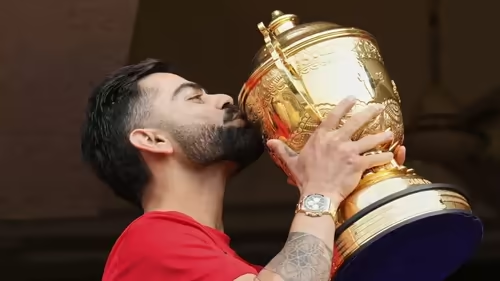
In a move that has sent shockwaves through the cricketing world, one of India’s most iconic IPL franchises is changing hands. The RCB sale is officially on—and it’s not just any buyer lining up. Serum Institute of India CEO Adar Poonawalla has publicly confirmed he’s preparing a “strong and competitive bid” to acquire Royal Challengers Bengaluru . This comes just months after RCB finally broke their 18-year curse to lift their maiden IPL trophy in 2025—a victory that made the franchise more valuable, and more emotionally charged, than ever before.
Why Is RCB Suddenly Up for Sale?
For nearly two decades, RCB was owned by Diageo, the British multinational beverage giant, through its United Spirits subsidiary. The team became synonymous with heartbreak—reaching three finals but never clinching the title… until 2025. In a stunning twist of fate, the very year they achieved glory, Diageo announced its decision to put the franchise on the market.
While the company hasn’t detailed its exact reasons, industry insiders speculate this is part of a broader strategic shift away from non-core entertainment assets. Regardless of the motive, the timing is extraordinary: selling a championship-winning team at the peak of its popularity and valuation. This makes the RCB sale not just a transaction, but a landmark moment in IPL history.
Who Is Adar Poonawalla—and Why Does He Want RCB?
Adar Poonawalla isn’t just another billionaire looking for a sports vanity project. As the CEO of the Serum Institute of India—the world’s largest vaccine manufacturer—he’s a global health leader with immense influence and resources. His net worth is estimated in the billions, and he’s known for bold, long-term investments.
But beyond wealth, Poonawalla is a self-proclaimed cricket fan. In interviews, he’s expressed deep admiration for RCB’s legacy and its passionate fanbase, famously known as the “Red Army.” Acquiring RCB would give him a powerful platform to connect with millions of Indians—not just as a businessman, but as a cultural stakeholder. It’s also a savvy brand synergy move: associating a life-saving health brand with a beloved sports institution could amplify both identities in unique ways [INTERNAL_LINK:ipl-brand-value-2026].
The Financial Stakes of the RCB Sale
RCB is consistently ranked among the most valuable IPL franchises. After their 2025 title win, its brand value is projected to have surged past $1 billion—a figure that puts it in elite company alongside Chennai Super Kings and Mumbai Indians.
Key financial drivers behind this valuation include:
- Massive Fanbase: RCB boasts one of the largest and most engaged social media followings in global sports.
- Stadium & Merchandise Revenue: Chinnaswamy Stadium in Bengaluru is a fortress, and merchandise sales skyrocketed post-victory.
- Media & Sponsorship Deals: A championship win unlocks premium broadcasting rights and high-value sponsorships.
Poonawalla’s “strong and competitive bid” suggests he’s prepared to pay a premium—potentially setting a new record for an IPL franchise acquisition. This isn’t just about buying a team; it’s about investing in a cultural institution.
What Could Change Under Poonawalla’s Ownership?
Fans are naturally anxious: will the soul of RCB survive a change in ownership? While Poonawalla has yet to reveal his full vision, several possibilities emerge:
- Enhanced Infrastructure: Investment in youth academies, training facilities, and women’s cricket initiatives.
- Global Branding Push: Leveraging his international network to take RCB beyond India—think exhibition matches in Europe or the U.S.
- Philanthropy Integration: Potential CSR campaigns linking cricket fandom with public health awareness, a unique angle no other IPL team has explored.
Critically, Poonawalla has signaled respect for RCB’s legacy. He’s unlikely to overhaul the team’s identity—red jerseys, the lion logo, and the “Ee Sala Cup Namde” slogan are sacred. Instead, his focus may be on building a sustainable, future-proof organization that can compete for titles year after year.
Fan Reactions and the Road Ahead
Initial reactions from the Red Army have been cautiously optimistic. Many fans welcome a high-profile Indian owner who understands the emotional weight of the RCB jersey. Memes and hashtags like #PoonawallaForRCB have already begun trending on social media.
However, skepticism remains. Some worry that corporate interests could dilute the team’s authenticity. Others question whether a health-sector leader has the cricketing acumen to manage a top-tier T20 franchise. These concerns are valid—but Poonawalla is expected to retain key management figures, including head coach and director of cricket operations, ensuring continuity on the field.
Conclusion: A New Chapter for the Red Army
The RCB sale marks the end of an era—and the thrilling beginning of another. With Adar Poonawalla in the driver’s seat, Royal Challengers Bengaluru could evolve from a passionate underdog into a globally integrated sports powerhouse. If he balances commercial ambition with genuine fan respect, this transition could secure RCB’s dominance for the next decade. One thing is certain: the Red Army will be watching, hoping their beloved team stays true to its roots while reaching for even greater heights.