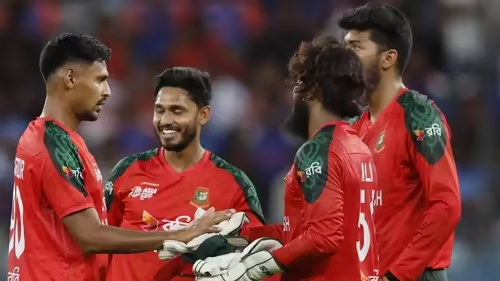
The calm before the storm of the T20 World Cup has been shattered by a major diplomatic row in the cricketing world. The Bangladesh Cricket Board (BCB) has fired a direct shot at the International Cricket Council (ICC), alleging “double standards” in its handling of venue security concerns—a move that has sent shockwaves through the international cricket community .
At the heart of this controversy is the ICC’s recent rejection of Bangladesh’s formal request to move its scheduled T20 World Cup matches out of India due to safety and security apprehensions. The BCB’s frustration isn’t just about logistics—it’s rooted in a stark contrast with how the ICC treated India’s own request just months ago regarding the 2025 Champions Trophy. This perceived inconsistency has ignited a fierce debate about fairness, geopolitics, and the future of neutral venues in global cricket.
Table of Contents
- The BCB Complaint: What Happened?
- The Champions Trophy Precedent: India’s Neutral Venue
- ICC Response and Official Stance
- Broader Implications for T20 World Cup 2026
- Historical Context of Venue Disputes in Cricket
- What Next for Bangladesh and the ICC?
- Conclusion: A Test of ICC Neutrality
- Sources
The BCB Complaint: What Happened?
In a strongly worded statement, the BCB expressed its deep disappointment over the ICC’s refusal to consider relocating Bangladesh’s group-stage matches from India. Citing “genuine safety and security concerns” for its players and officials, the board had formally requested that these fixtures be moved to a neutral venue—similar to arrangements made in past high-tension scenarios involving other nations .
However, the ICC stood firm, asserting that all necessary security protocols are in place and that India remains a safe and capable host for the T20 World Cup. This decision, while procedurally sound on paper, has left Bangladesh feeling singled out and unfairly treated—especially when compared to a recent precedent involving the very same host nation.
The Champions Trophy Precedent: India’s Neutral Venue
Here’s where the controversy intensifies. The BCB explicitly referenced the ICC’s handling of the 2025 ICC Men’s Champions Trophy. Due to ongoing political tensions between India and Pakistan, the BCCI had refused to travel to Pakistan—the original host—for the tournament. In response, the ICC swiftly agreed to shift the entire event to a neutral venue, widely reported to be the UAE or Sri Lanka .
From Bangladesh’s perspective, this sets a clear precedent: when a Full Member nation expresses security concerns, the ICC accommodates them. So why, they ask, is their request being dismissed? As one BCB official anonymously told reporters, “If India’s comfort is grounds for moving an entire tournament, why isn’t Bangladesh’s?” This rhetorical question lies at the core of the current standoff.
ICC Response and Official Stance
The ICC has maintained a consistent public position: the T20 World Cup will proceed as scheduled across its designated host countries, including India. Officials emphasize that comprehensive risk assessments have been conducted in collaboration with local authorities, and that “robust security measures” are in place for all participating teams .
Privately, however, sources suggest the ICC is walking a tightrope. Granting Bangladesh’s request could open the floodgates for similar demands from other teams, potentially destabilizing the tournament structure. Yet, ignoring legitimate concerns risks alienating a key member nation and undermining the council’s credibility as a neutral arbiter.
Broader Implications for T20 World Cup 2026
This dispute isn’t just about one team’s matches—it raises fundamental questions about the future of multi-nation tournaments in politically sensitive regions. Key implications include:
- Team Participation Risk: If Bangladesh feels its concerns are ignored, there’s a non-zero chance it could withdraw, casting a shadow over the tournament’s legitimacy.
- Precedent for Future Hosts: How the ICC handles this case will set a benchmark for how it deals with security requests in upcoming events, including the 2027 ODI World Cup.
- Fan and Sponsor Confidence: Public disputes like this can erode fan trust and make sponsors wary of associating with politically fraught events.
For fans planning to follow every ball of the T20 World Cup, this controversy adds an unexpected layer of uncertainty to what should be a celebration of cricket. Stay updated with our [INTERNAL_LINK:t20-world-cup-2026-fixtures] page for the latest schedule changes.
Historical Context of Venue Disputes in Cricket
This isn’t the first time venue politics have disrupted international cricket. In 1996, Australia and the West Indies refused to play in Sri Lanka during the ODI World Cup due to security fears following a bombing in Colombo. More recently, several teams declined to tour Pakistan for years after the 2009 attack on the Sri Lankan team bus.
Neutral venues have often served as a pragmatic solution. The ICC’s own history shows flexibility—whether it’s hosting India-Pakistan matches in Dubai or moving the 2021 T20 World Cup from India to the UAE due to the pandemic. Given this track record, the BCB argues, its request is neither unreasonable nor unprecedented.
What Next for Bangladesh and the ICC?
As of now, Bangladesh has not announced any intention to boycott the tournament, but the pressure is mounting. The BCB may escalate the matter to the ICC’s Chief Executives’ Committee or seek support from other Asian cricket boards.
Meanwhile, the ICC faces a critical window to de-escalate tensions. A potential compromise—such as enhanced security guarantees, third-party monitoring, or even a symbolic gesture like moving one match—could salvage the situation. But time is running out as the tournament edges closer.
Conclusion: A Test of ICC Neutrality
The T20 World Cup was meant to unite fans through the thrill of the game. Instead, it’s become a flashpoint for a deeper crisis of confidence in the ICC’s impartiality. The council now stands at a crossroads: uphold its commitment to consistent, transparent standards for all members, or risk being seen as favoring powerful boards at the expense of smaller ones. How this plays out will define not just the 2026 tournament, but the very soul of international cricket governance.
Sources
- Times of India: T20 WC: Bangladesh cite India’s CT ‘privilege’; accuse ICC of double standards
- ICC Official Website: International Cricket Council
- ESPNcricinfo: Historical coverage of venue disputes and neutral matches
- Cricket Australia: Statements on past security-related decisions