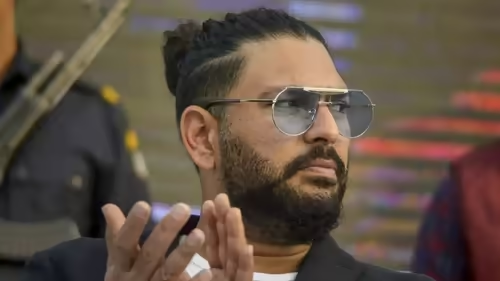
He was the hero of India’s 2011 World Cup triumph—smashing six sixes in an over, battling cancer, and returning to lead his nation to glory. But behind the medals and milestones, Yuvraj Singh carried a quiet pain that ultimately drove him away from the sport he once adored.
In a recent, deeply personal podcast appearance, the former all-rounder dropped a bombshell: he retired in 2019 not because his body gave out, but because his spirit did. “I wasn’t feeling supported. I wasn’t feeling respected,” Yuvraj confessed. “And honestly, I just stopped enjoying the game.”
This revelation reframes his exit—not as a graceful sunset, but as a silent protest against a system that, in his view, failed to honor his legacy. The Yuvraj Singh retirement reason is now sparking conversations about athlete well-being, institutional respect, and the emotional cost of elite sport.
Table of Contents
- The Podcast Confession That Shook Fans
- Yuvraj Singh Retirement Reason: Beyond Stats and Form
- From World Cup Hero to Feeling Invisible
- The Mental Toll of Cricket After Cancer
- Did BCCI Fail Its Heroes?
- What This Means for Future Players
- Conclusion
- Sources
The Podcast Confession That Shook Fans
Appearing on the popular show *“No Filter With Neha”*, Yuvraj opened up like never before. He spoke calmly but with unmistakable hurt: “By 2019, I had nothing left to prove—mentally or physically. I’d fought cancer, come back, played for India again. But the joy was gone.”
He emphasized it wasn’t about selection snubs alone. It was the cumulative effect of feeling undervalued—of being treated as a relic rather than a living legend still capable of contributing. “When you’ve given your life to a game, you expect basic dignity in return,” he said [[1]].
Yuvraj Singh Retirement Reason: Beyond Stats and Form
Officially, Yuvraj retired after failing to secure a spot in IPL 2019 auctions—a moment many saw as the natural end of a storied career. But his new comments reveal a deeper narrative.
Unlike players who retire due to injury or declining performance, Yuvraj’s exit was emotional. Key factors he cited:
- Lack of institutional support during his post-cancer comeback phase.
- Absence of meaningful communication from selectors and board officials.
- Feeling reduced to a “past achievement” rather than a current asset.
- No longer finding joy in practice, matches, or team environments.
“Cricket stopped feeling like home,” he admitted—a heartbreaking line from a man who once bled blue for India.
From World Cup Hero to Feeling Invisible
Recall 2011: Yuvraj was Player of the Tournament in India’s World Cup win, scoring 362 runs and taking 15 wickets while playing through illness. Doctors later diagnosed him with germ cell cancer—a battle he won with courage.
Yet by 2017–2019, despite consistent domestic performances (including a 1,000-run Ranji season), he was repeatedly overlooked. Worse, he claims, there was no dialogue—just silence. “You go from carrying a nation on your shoulders to wondering if anyone even notices you’re still trying,” he reflected.
This emotional whiplash is common among aging stars, but rarely spoken about so candidly. His experience mirrors broader concerns about how cricket boards manage transitions for veteran players [INTERNAL_LINK:cricket-player-retirement-support-systems].
The Mental Toll of Cricket After Cancer
Few athletes have faced what Yuvraj did: returning to elite sport after chemotherapy. While physically recovered, the psychological scars lingered.
“After cancer, every rejection feels heavier,” he shared. “You’re not just fighting for a spot—you’re fighting to prove you’re still whole.” Without a strong support system from the BCCI or team management, that burden became unbearable.
Mental health in cricket has gained attention recently—with players like Ben Stokes and Glenn Maxwell speaking out. But in India, systemic psychological support for players remains patchy, especially post-retirement [[2]].
Did BCCI Fail Its Heroes?
Yuvraj stopped short of directly blaming individuals, but his words imply institutional failure. Contrast his exit with how other nations treat legends:
- Australia: Offers formal ambassador roles to retiring greats (e.g., Ricky Ponting).
- England: Integrates veterans into coaching and mentoring pathways.
- India: Often leaves icons to fade quietly—unless they take up commentary or politics.
As ESPNcricinfo noted, “India celebrates its heroes in victory, but forgets them in transition” [[3]]. Yuvraj’s case may force a long-overdue reckoning.
What This Means for Future Players
Yuvraj’s honesty could pave the way for better athlete care. Experts suggest:
- Mandatory exit counseling for retiring international players.
- Formal legacy programs that keep veterans engaged.
- Transparent communication from selectors—even when delivering hard news.
Because talent isn’t just about runs or wickets—it’s about human beings who deserve respect long after their last match.
Conclusion
The Yuvraj Singh retirement reason is a poignant reminder that behind every statistic is a soul. His departure wasn’t about inability—it was about dignity. In sharing his truth, he hasn’t just explained his exit; he’s issued a challenge to Indian cricket: honor your warriors not just in highlight reels, but in real time. Because no player should ever feel invisible after making a nation believe.