Table of Contents
- The Toss That Sets the Stage
- Why Batting First Could Be a Masterstroke
- The Risks of Setting a Target
- Key Batters to Watch in India’s Innings
- New Zealand’s Chase Strategy and Danger Men
- Historical Context: India vs New Zealand in T20s
- Conclusion: A Bold Statement from Team India
- Sources
The Toss That Sets the Stage
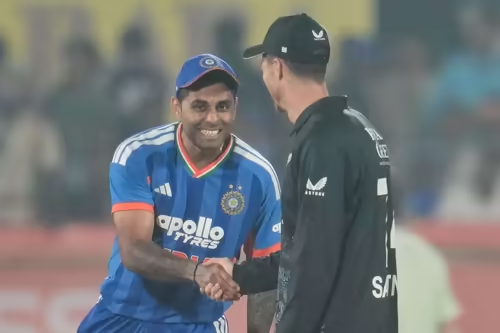
The atmosphere is electric as the India vs New Zealand T20 series reaches its dramatic climax. With the series locked at 2-2, everything hinges on the final match—and the toss just became the first major strategic move. Stand-in captain Suryakumar Yadav called it right and, in a decisive show of confidence, chose to bat first [[1]].
This isn’t just a routine decision. In modern T20 cricket, especially in high-stakes deciders, chasing is often seen as the safer option. But SKY’s choice to take the attack to the Kiwis signals that Team India is playing to win, not just to avoid losing. It’s a statement of intent from a side looking to assert dominance on home soil.
Why Batting First Could Be a Masterstroke
Several factors likely influenced India’s decision to bat first:
- Pitch Conditions: Early in the day, the pitch may offer better bounce and true carry for batters before it slows down under lights.
- Dew Factor Mitigation: By batting first, India avoids the nightmare scenario of chasing with a wet ball in the second innings—a common issue in Indian evening matches [[4]].
- Psychological Pressure: Setting a target forces New Zealand to play catch-up, potentially leading to rash shots from their top order.
- Powerplay Dominance: With explosive openers like Abhishek Sharma and Yashasvi Jaiswal, India can maximize the fielding restrictions to post a massive total [[2]].
If the top order fires, a score of 190+ is well within reach—and that could be more than enough on a surface that might grip later.
The Risks of Setting a Target
Of course, batting first comes with its own perils. If India’s batters get off to a slow start or lose early wickets, the pressure mounts quickly. Unlike a chase where you can adapt your run rate, a batting team must constantly assess risk versus reward without knowing the par score.
Moreover, New Zealand’s bowling attack—led by seasoned campaigners like Tim Southee and the crafty Mitchell Santner—is more than capable of restricting even the most aggressive lineups. A below-par total could hand the Kiwis a straightforward path to victory.
Key Batters to Watch in India’s Innings
All eyes will be on a few critical players as India looks to build a formidable total:
- Suryakumar Yadav (Captain): Known for his 360-degree stroke play, SKY’s ability to accelerate in the middle overs will be pivotal.
- Abhishek Sharma: The young left-hander has been in scintillating form and could be the X-factor at the top.
- <Shivam Dube: His power-hitting in the death overs can turn a good score into a daunting one [[3]].
For fantasy cricket enthusiasts, these players are prime picks for captaincy roles. Check out our [INTERNAL_LINK:fantasy-cricket-tips-ind-vs-nz] for more insights.
New Zealand’s Chase Strategy and Danger Men
If India posts a competitive total, New Zealand’s chase will rely heavily on their experienced core:
- Kane Williamson: The calm anchor who can absorb pressure and rebuild if early wickets fall.
- Devon Conway: A technically sound opener who thrives in high-stakes chases.
- Glenn Phillips: Capable of explosive cameos that can tilt the game in a few overs.
Their strategy will likely involve steady starts from Conway and Finn Allen, followed by controlled aggression from Williamson and Phillips in the middle phase.
Historical Context: India vs New Zealand in T20s
Historically, India vs New Zealand T20 encounters have been tightly contested. According to ESPNcricinfo, the two teams have faced off 24 times, with India winning 13 and New Zealand 10 [[5]]. Notably, in India, the home side holds a significant edge, having won 8 of the 11 matches played on home soil. This historical advantage adds another layer of confidence to India’s bat-first call.
For more on head-to-head stats, visit the official ESPNcricinfo database—a trusted source for cricket analytics [[5]].
Conclusion: A Bold Statement from Team India
By choosing to bat first in this high-octane India vs New Zealand decider, Suryakumar Yadav and Team India have sent a clear message: they’re here to dominate, not defend. While the decision carries inherent risks, it also offers the best chance to control the narrative of the match from the outset. If the batters deliver, this could be remembered as the moment India seized the initiative and closed the series in style. The cricket world watches with bated breath.
Sources
- Times of India: Ind vs NZ: India win toss, opt to bat first [[1], [2], [3]]
- Cricbuzz: India vs New Zealand T20 Series 2026
- ESPNCricinfo: India vs New Zealand T20I Head-to-Head Stats [[5]]
- ICC: ICC Official Match Conditions and Pitch Reports [[4]]