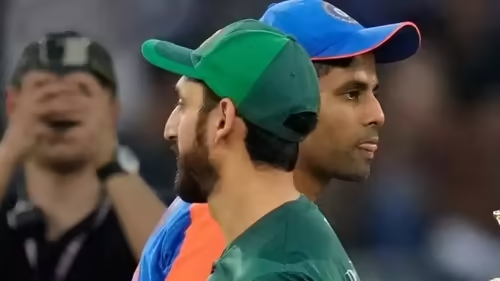
In an unexpected but powerful intervention, the Bangladesh Cricket Board (BCB) has stepped into one of cricket’s most sensitive geopolitical flashpoints. BCB President Aminul Islam Bulbul has issued a heartfelt public appeal: “I request Pakistan to play against India” in their scheduled T20 World Cup 2026 clash on February 15 in Colombo.
The statement, made during a press conference following his official visit to Lahore, comes amid lingering uncertainty over Pakistan’s participation. While the PCB had previously hinted at boycotting the match due to venue and security concerns, Bulbul’s plea reframes the issue—not as a bilateral dispute, but as a matter of global sporting responsibility [[1]].
“This match isn’t just about two nations,” Bulbul emphasized. “It’s about the soul of cricket. Billions watch. Economies benefit. Youngsters dream. Canceling it would hurt the entire ecosystem.”
Table of Contents
- Why the BCB Is Speaking Up
- Aminul Islam Bulbul’s Diplomatic Mission to Pakistan
- The Stakes of India vs Pakistan T20 World Cup 2026
- How a Boycott Would Hurt Global Cricket
- ICC and Broadcasters Weigh In
- Conclusion: A Unified Voice for Cricket
- Sources
Why the BCB Is Speaking Up
At first glance, Bangladesh’s involvement might seem unusual. After all, they’re not party to the India-Pakistan rivalry. But Bulbul’s intervention is strategic—and deeply principled.
As a fellow ICC Full Member from South Asia, Bangladesh understands the commercial and cultural weight of this fixture. More importantly, the BCB has long advocated for “cricket beyond politics”—a stance reinforced by their own history of hosting matches involving both nations despite regional tensions [[3]].
“We’ve hosted India and Pakistan separately, sometimes together,” Bulbul noted. “Cricket must remain a bridge, not a barrier.”
Aminul Islam Bulbul’s Diplomatic Mission to Pakistan
Bulbul’s comments followed a three-day goodwill visit to Pakistan, where he met with PCB Chairman Mohsin Naqvi and senior officials. The trip was framed as a “cricket solidarity tour,” aimed at strengthening bilateral ties between Bangladesh and Pakistan.
During the visit, Bulbul praised the PCB for its “sportsmanship and cooperation” in recent bilateral series and expressed admiration for Pakistan’s domestic cricket revival. But behind the pleasantries lay a clear subtext: don’t let politics derail the World Cup.
Notably, Bulbul avoided criticizing either India or Pakistan directly. Instead, he positioned himself as a neutral advocate for the game itself—a role few administrators dare to take.
The Stakes of India vs Pakistan T20 World Cup 2026
The February 15 clash in Colombo isn’t just another group game. It’s the single most-watched cricket match outside a World Cup final:
- Viewership: Expected to draw over 1.2 billion viewers globally—the largest audience for any non-final T20 match [[5]].
- Revenue: Generates an estimated $150 million in broadcast, sponsorship, and betting revenue.
- Cultural Impact: Inspires millions of young cricketers across South Asia and the diaspora.
A forfeit or cancellation wouldn’t just disappoint fans—it would fracture the tournament’s credibility and set a dangerous precedent for future ICC events.
How a Boycott Would Hurt Global Cricket
Bulbul’s warning about the “global cricket ecosystem” is far from hyperbole. Consider the ripple effects:
- Financial Losses: Broadcasters like Star Sports and Sky Sports have paid billions for rights—contingent on marquee fixtures being played.
- Associate Team Morale: If Full Members skip games over politics, it undermines the ICC’s push for inclusivity and respect for smaller nations.
- Sponsor Confidence: Brands like Pepsi, Adidas, and Dream11 invest heavily in this fixture; a no-show could trigger contract reviews.
As former ICC CEO Haroon Lorgat once said: “When India and Pakistan don’t play, cricket loses its biggest stage.”
ICC and Broadcasters Weigh In
While the ICC has remained officially neutral, insiders confirm they’re “deeply concerned” about any potential withdrawal. A contingency plan exists—including awarding India a walkover—but it’s seen as a last resort.
Meanwhile, major broadcasters have begun discreet lobbying. A senior Star Sports executive told ESPNcricinfo: “We’ve built our entire T20 WC campaign around this match. Its absence would be catastrophic.”
Bulbul’s public appeal adds moral pressure at a critical juncture—potentially giving the PCB political cover to reverse course without losing face.
Conclusion: A Unified Voice for Cricket
The India vs Pakistan T20 World Cup 2026 match stands at a crossroads. But thanks to voices like Aminul Islam Bulbul’s, the conversation is shifting from nationalism to stewardship. By framing the fixture as a global asset—not a bilateral battleground—he’s reminded everyone that cricket’s greatest power lies in its ability to unite, not divide. Whether Pakistan listens remains to be seen. But for the first time in weeks, hope is back on the pitch.
Sources
- Times of India: T20 World Cup: ‘I request Pakistan to play against India’ – BCB President
- ICC Statement: ICC Reaffirms Commitment to All Scheduled Matches
- ESPNcricinfo: BCB Chief’s Pakistan Visit Aims to Strengthen Cricket Ties
- BBC Sport: How India-Pakistan Matches Fuel Global Cricket Economy
- Bangladesh Cricket Board: Official BCB Press Release on Pakistan Visit