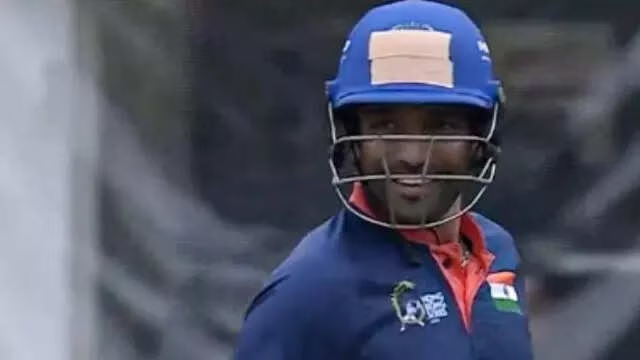
Cricket’s oldest rivalry delivered yet another heart-stopper—but this time under the neon lights of Hong Kong and the unpredictable shadow of rain clouds. In a dramatic, rain-hit clash at the Hong Kong Sixes 2025, India edged Pakistan by a razor-thin margin of 2 runs using the DLS method, keeping fans on the edge of their seats until the very last ball .
The match, packed with explosive hitting, tactical bowling, and weather drama, showcased why the India-Pakistan contest remains the most electrifying in the sport—even in a shortened six-a-side format. With Robin Uthappa’s blistering cameo and Stuart Binny’s ice-cool final over, Team India held their nerve in a game that could’ve swung either way.
Table of Contents
- Match Summary: India vs Pakistan Hong Kong Sixes
- Robin Uthappa Ignites India’s Innings
- Stuart Binny: The Unlikely Hero
- How the DLS Method Decided the Thriller
- Hong Kong Sixes Format: Why It Matters
- Historical Context: India-Pakistan in Hong Kong
- Conclusion: A Mini Classic with Maximum Drama
- Sources
Match Summary: India vs Pakistan Hong Kong Sixes
On a humid evening in Hong Kong, the much-anticipated India vs Pakistan Hong Kong Sixes encounter began under clear skies—but Mother Nature had other plans. India, batting first, posted a competitive total powered by veteran Robin Uthappa’s explosive 28 off just 11 balls .
Before rain interrupted play, India’s innings was curtailed, and the target for Pakistan was revised using the Duckworth-Lewis-Stern (DLS) method. Chasing a recalibrated total, Pakistan looked in control at one stage, but a dramatic collapse in the death overs—triggered by Stuart Binny’s tight bowling—left them agonizingly short by 2 runs.
The result not only gave India a crucial win in the tournament but also added another unforgettable chapter to cricket’s most storied rivalry.
Robin Uthappa Ignites India’s Innings
At 39 years old, Robin Uthappa may be a “veteran” by T20 standards, but his instincts remain razor-sharp. Coming in during the middle phase of India’s innings, Uthappa unleashed a breathtaking assault that shifted the momentum decisively.
- His 28 came at a strike rate of 254.5.
- He smashed 2 fours and 3 sixes, all in a single 11-ball burst.
- His biggest six cleared the mid-wicket boundary by a wide margin, drawing roars from the Indian fans in the stands .
In a format where every ball counts, Uthappa’s cameo didn’t just add runs—it set a psychological benchmark that Pakistan struggled to match under pressure.
Stuart Binny: The Unlikely Hero
While Uthappa provided the firepower, it was the ever-reliable Stuart Binny who sealed the deal with the ball. Tasked with bowling the final over, Binny conceded just 5 runs while defending 8—a masterclass in composure.
His figures may not jump off the page—1/12 in 2 overs—but his economy rate of 6.00 in a high-scoring, rain-affected contest was invaluable. With Pakistan needing 9 off the last 6 balls, Binny mixed yorkers, slower balls, and wide variations to induce false shots and pressure-induced errors.
For a player once dubbed “India’s forgotten all-rounder,” this performance was a powerful reminder of his utility in crunch moments [INTERNAL_LINK:stuart-binny-career-highlights].
How the DLS Method Decided the Thriller
The rain interruption added a layer of complexity that only the DLS method could resolve. According to England and Wales Cricket Board guidelines, DLS recalculates targets based on resources (overs and wickets) remaining.
In this case:
- India’s innings was stopped early due to rain.
- Their score was adjusted to reflect a “par” total for a full 5-over innings.
- Pakistan’s revised target was set accordingly, and they fell just short.
While some fans debate DLS’s fairness in ultra-short formats, it remains the internationally accepted standard—and on this night, it gave India a legitimate, if narrow, victory.
Hong Kong Sixes Format: Why It Matters
The Hong Kong Sixes is a unique T20 variant where teams consist of only six players, with each innings limited to five overs. The format emphasizes explosive batting, tactical bowling, and fielding innovation.
Why it’s gaining traction:
- Fast-paced: Matches last under 90 minutes.
- Star-studded: Features retired legends and current stars (like Uthappa and Binny).
- Global appeal: Attracts fans from across Asia and beyond .
For players, it’s a chance to showcase flair. For fans, it’s pure, unfiltered entertainment—and this India-Pakistan clash was its finest advertisement.
Historical Context: India-Pakistan in Hong Kong
While full international matches between India and Pakistan are rare outside ICC events, the Hong Kong Sixes has occasionally hosted their legends or second-string teams. This 2025 edition marked a rare on-field meeting in a neutral venue, adding spice to an already simmering rivalry.
Previous encounters in this tournament have been close, but none as tense as this DLS-decided thriller—making it an instant classic in the annals of unofficial India-Pakistan contests.
Conclusion: A Mini Classic with Maximum Drama
The India vs Pakistan Hong Kong Sixes match may have lasted just five overs per side, but it packed the drama of a full T20. From Uthappa’s fireworks to Binny’s nerve, and the ever-present threat of rain, every second mattered. In the end, India’s 2-run DLS victory wasn’t just a win—it was a testament to how even in abbreviated formats, the India-Pakistan rivalry never loses its magic.