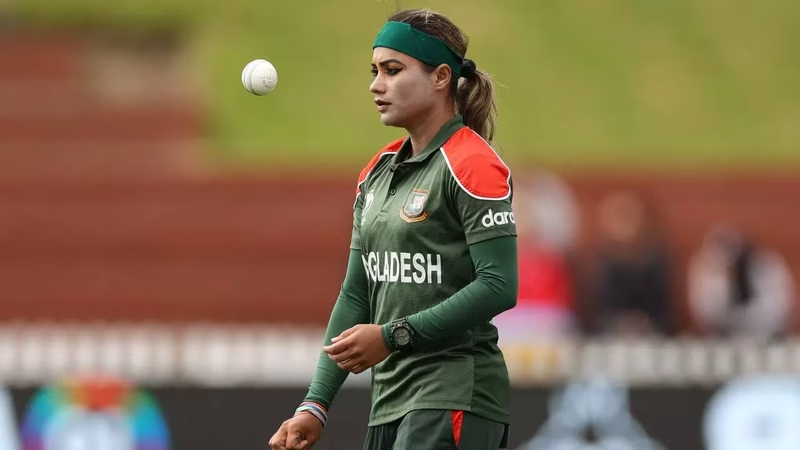
In a disturbing revelation that has sent shockwaves through South Asian cricket, former Bangladesh women’s fast bowler Jahanara Alam has accused a former national selector of repeated inappropriate and indecent behavior during the 2022 ICC Women’s ODI World Cup. The Bangladesh Cricket Board (BCB) has responded swiftly, forming a three-member investigative committee to probe the serious allegations—marking a critical moment for athlete safety and accountability in women’s cricket .
Alam’s detailed account, shared in an interview with the Times of India, includes lewd questions about her menstrual cycle, unwanted physical contact—such as being pulled close and pressed against the selector’s chest—and a culture of silence that allegedly allowed such misconduct to persist unchecked . Her bravery in speaking out has ignited urgent conversations about power dynamics, gender-based harassment, and the duty of cricket boards to protect their players.
Table of Contents
- Jahanara Alam Harassment Allegations: What She Said
- BCB Response and Investigation Timeline
- Broader Implications for Women’s Cricket Safety
- Global Precedents and Cricket Governance
- Why This Case Could Be a Turning Point
- Support Systems for Athletes in Crisis
- Conclusion: Accountability Starts Now
- Sources
Jahanara Alam Harassment Allegations: What She Said
Jahanara Alam, a key figure in Bangladesh’s women’s cricket rise and the first Bangladeshi woman to take an international wicket in an ODI, described a pattern of misconduct by a senior male official during the team’s 2022 World Cup campaign in New Zealand.
Among her most distressing claims:
- He allegedly had a “habit of pulling girls close and pressing them to his chest” under the guise of greeting.
- He reportedly asked invasive personal questions, including “Are you on your periods?” during team discussions.
- She claimed multiple officials witnessed the behavior but failed to intervene, creating a climate of fear and normalization .
Alam, now retired from international cricket, stated she remained silent for years out of fear of retaliation and career damage—a common reality for many women in male-dominated sports environments.
BCB Response and Investigation Timeline
Within 24 hours of the allegations surfacing, the BCB announced the formation of a high-level committee to investigate. The panel includes a retired judge, a former female cricketer, and a legal expert—an attempt to ensure impartiality and gender sensitivity.
Key details of the probe:
- Duration: 15 days from initiation.
- Mandate: Interview Alam, the accused ex-selector, team staff, and witnesses from the 2022 tour.
- Potential outcomes: Lifetime ban, legal referral, or policy reforms if misconduct is confirmed.
BCB President Nazmul Hassan stated: “We take any allegation of this nature with utmost seriousness. Player welfare is non-negotiable.” While commendable, critics argue this should have been addressed internally long before going public.
Broader Implications for Women’s Cricket Safety
This case isn’t isolated. Across global cricket, women have increasingly spoken out about harassment, from England to India to the West Indies. Yet, reporting mechanisms remain weak, especially in developing cricketing nations.
The Jahanara Alam harassment case highlights three systemic gaps:
- Lack of independent channels: Players often report to the same boards that employ alleged perpetrators.
- Insufficient safeguarding training: Many team officials receive no education on appropriate conduct.
- Cultural stigma: Speaking up is seen as “disloyal” or “dramatic” in hierarchical setups.
As women’s cricket grows—with record viewership in the 2025 World Cup and expanding leagues like the WPL—governance must evolve at the same pace [INTERNAL_LINK:womens-cricket-safeguarding-policies].
Global Precedents and Cricket Governance
The ICC has a Code of Conduct that prohibits sexual harassment, but enforcement relies on member boards. In 2021, Cricket South Africa suspended an administrator over similar allegations. In England, the “Cricket’s #MeToo” movement led to multiple resignations and an independent commission.
However, in Bangladesh, such mechanisms have been reactive, not proactive. Alam’s case could pressure the BCB—and by extension, other Asian boards—to adopt ICC-recommended safeguarding frameworks, including mandatory chaperones, confidential hotlines, and third-party auditors.
Why This Case Could Be a Turning Point
What makes this moment pivotal is Alam’s profile. As a trailblazer in Bangladeshi women’s cricket, her voice carries weight. Her decision to speak out—even after retirement—gives cover to current players who may have suffered in silence.
Moreover, the timing coincides with Bangladesh’s push to host more women’s international fixtures and bid for WPL-style franchise tournaments. Investor and ICC confidence hinges on demonstrable commitment to athlete safety.
Support Systems for Athletes in Crisis
Experts stress that beyond punishment, support is key. According to the UN Women’s Sport Initiative, effective athlete protection includes:
- Confidential counseling services
- Whistleblower protections
- Gender-balanced selection and management panels
- Regular ethics training for all staff
The BCB has yet to announce such measures—but public pressure may accelerate their adoption.
Conclusion: Accountability Starts Now
The Jahanara Alam harassment