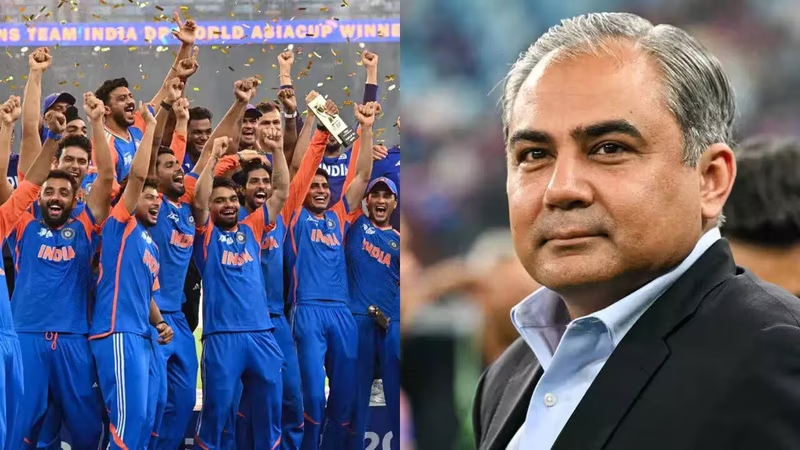
Asia Cup Trophy Row: India’s Victory Still Unrewarded
It’s been months since India lifted the 2025 Asia Cup—but they’re still waiting for the actual trophy. In a diplomatic twist that’s drawing global cricketing attention, the Asia Cup trophy row remains unresolved, despite recent informal discussions on the sidelines of the ICC meeting in Dubai.
According to reports, BCCI Secretary Devajit Saikia raised the issue directly, pointing out that the 2025 champions have yet to receive their well-deserved silverware. Representing the Pakistan Cricket Board (PCB) was none other than its chairman, Mohsin Naqvi. While no formal resolution emerged, the mere fact that the topic was broached—however casually—shows just how sensitive and symbolic this dispute has become.
Table of Contents
- What Happened in Dubai?
- Why Is the Trophy Still Not Handed Over?
- BCCI vs PCB: A Complicated History
- What This Means for Future Asia Cups
- Key Players in the Dispute
- Conclusion
- Sources
What Happened in Dubai?
During the recent ICC board meetings in Dubai—a critical gathering for global cricket governance—BCCI Secretary Devajit Saikia used informal channels to highlight a glaring omission: India, the official winners of the 2025 Asia Cup, have not been presented with the tournament trophy .
While no official agenda item was tabled, Saikia’s comments were directed at PCB Chairman Mohsin Naqvi, who was present at the same event. The exchange, described as “informal discussions,” underscores the delicate balance both boards must maintain—cooperating at the ICC level while managing deep-seated bilateral tensions back home.
Crucially, there was no breakthrough. The impasse continues. But the fact that India chose to raise the issue—even off-record—signals growing frustration within the BCCI over what many see as a matter of basic sporting protocol.
Why Is the Trophy Still Not Handed Over?
The Asia Cup trophy is traditionally handed over by the previous host nation to the winners. In 2025, Pakistan was the official host, though the tournament was played on neutral venues due to political tensions—a compromise brokered by the Asian Cricket Council (ACC).
However, logistical and political complications appear to have stalled the physical transfer of the trophy. Sources suggest that the PCB may be reluctant to formally “hand over” the trophy without reciprocal goodwill gestures from the BCCI—such as confirmation of a bilateral series, which India has consistently avoided since 2019 .
From India’s perspective, winning on the field should be enough. The trophy isn’t just metal—it’s a symbol of excellence, team effort, and national pride. Delaying its delivery blurs the line between politics and sport, a line the ICC has long tried to uphold.
BCCI vs PCB: A Complicated History
This Asia Cup trophy row doesn’t exist in a vacuum. It’s the latest chapter in a decades-long saga of cooperation, conflict, and cricketing diplomacy between India and Pakistan.
- 2004–2007: Regular bilateral series occurred, including memorable Test and ODI contests.
- 2008: The Mumbai terror attacks led to a near-total halt in cricketing ties.
- 2012–2019: Occasional meetings in ICC or ACC tournaments, but no bilateral cricket in either country.
- 2023–2025: Pakistan hosts ACC events (like Asia Cup) on neutral soil; India participates but refuses home series.
In this context, even symbolic acts—like handing over a trophy—become loaded with political weight. For the PCB, it’s leverage. For the BCCI, it’s a principle: sport shouldn’t be held hostage.
What This Means for Future Asia Cups
If the 2025 trophy remains in limbo, it could set a dangerous precedent for future editions of the Asia Cup. Imagine a scenario where winning a major regional tournament doesn’t guarantee you receive the physical award—a situation that would undermine the credibility of the ACC and the spirit of the game.
The Asian Cricket Council, which oversees the tournament, has so far remained silent. But pressure is mounting. With the next Asia Cup scheduled for 2027, clarity on trophy protocols, host responsibilities, and winner recognition is urgently needed. Failure to resolve this could discourage top teams from full participation—or worse, lead to withdrawals.
For fans of [INTERNAL_LINK:asia-cup-history], this dispute tarnishes what should be a celebration of Asian cricketing excellence.
Key Players in the Dispute
Devajit Saikia (BCCI Secretary)
A former first-class cricketer and now a key administrator, Saikia has taken a firm but diplomatic stance. His quiet raising of the issue in Dubai shows BCCI’s preference for behind-the-scenes resolution over public confrontation.
Mohsin Naqvi (PCB Chairman)
Appointed in 2024, Naqvi—a former journalist and government official—has sought to professionalize the PCB while navigating complex India-Pakistan dynamics. His presence in Dubai suggests PCB is open to dialogue, even if progress is slow.
Asian Cricket Council (ACC)
The ACC, a sub-organization of the ICC, is the ultimate custodian of the Asia Cup. Its silence so far is conspicuous. For more on the ACC’s role, visit the official ICC website, which outlines regional governance structures.
Conclusion
The Asia Cup trophy row is far more than a ceremonial oversight—it’s a reflection of the strained yet inescapable relationship between two cricketing giants. India’s victory in the 2025 edition was hard-earned on the field, and the delayed trophy handover feels like a post-match asterisk that shouldn’t exist.
While informal talks in Dubai mark a small step, real resolution requires formal engagement, ACC intervention, and a mutual commitment to separate sport from politics. Until then, the 2025 Asia Cup champions will have their memories—but not their trophy.
Sources
- Times of India: Asia Cup trophy row: ‘Informal discussions’ on sidelines of ICC meet in Dubai; impasse continues
- Historical context on India-Pakistan cricket ties from ESPN Cricinfo archives.
- ICC Governance Structure: ICC Official Site