India’s Record 408-Run Defeat: A Stark Reality Check in Guwahati
The sun over Guwahati on Wednesday, November 26, 2025, didn’t just set on a Test match; it set on a deeply concerning chapter for Indian cricket. Chasing an improbable 549, the Indian batting lineup crumbled for a mere 140, handing South Africa a staggering 408-run victory—the India’s biggest Test defeat in their 92-year history . This wasn’t just a loss; it was a comprehensive whitewash, a 2-0 series drubbing that has left fans and experts questioning the team’s current state.
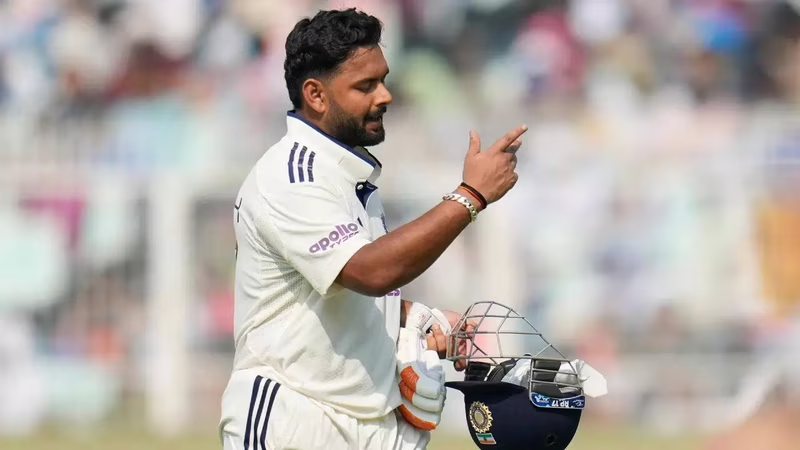
At the heart of this collapse was a masterclass from off-spinner Simon Harmer, whose career-best figures of 6/37 in the second innings ripped through the Indian middle and lower order like a hot knife through butter . Faced with this historic low, stand-in captain Rishabh Pant didn’t hide behind excuses. His post-match comments were a rare, candid admission of being thoroughly outplayed.
Table of Contents
- Historic Collapse: India’s Record Defeat by the Numbers
- Pant on the Whitewash: Admitting SA Dominance
- Harmer and South Africa’s Tactical Mastery
- What Went Wrong for India? A Deep Dive
- Looking Ahead: Can India Bounce Back?
Historic Collapse: India’s Record Defeat by the Numbers
The sheer scale of this loss is unprecedented for a team of India’s caliber, especially at home. The previous record for their heaviest defeat by runs was a 342-run loss to Australia in Nagpur back in 2004 . South Africa didn’t just beat that record; they obliterated it by a massive 66 runs.
To put the Guwahati Test in perspective, here’s a quick recap of the final day:
- Target for India: 549 runs
- India’s 2nd Innings Total: 140 all out
- Margin of Victory: 408 runs
- Series Result: South Africa wins 2-0
This result is a significant statistical blip on India’s otherwise strong home record. It marks only the second time South Africa has ever won a Test series in India, the first being way back in 2000 . For a team that has dominated subcontinental conditions for over a decade, this is a seismic shift.
Pant on the Whitewash: Admitting SA Dominance
Faced with this historic low, new captain Rishabh Pant chose honesty over platitudes. In his post-match press conference, he was blunt: “A little disappointing,” he admitted, openly acknowledging that “South Africa dominated” the series from start to finish .
Pant’s comments are a stark departure from the usual post-match deflections. He didn’t blame the pitch, the weather, or bad luck. Instead, he highlighted a team that was simply out-thought and out-fought. “They dominated the series but at the same time, you can’t take cricket for granted,” he added, a subtle nod to the complacency that might have seeped in from years of home dominance .
This level of accountability from a young captain is commendable, but it also underscores the urgency for a serious review. The team needs to “learn quickly from tactical and batting failures,” as reports have indicated [[Original Summary]]. This isn’t just about individual performances; it’s about a collective failure to adapt and counter a well-prepared South African unit.
Harmer and South Africa’s Tactical Mastery
While India’s batting was fragile, South Africa’s success was built on a foundation of smart, aggressive cricket. Their first-innings total of 489 set the platform, but it was their bowling, spearheaded by the unassuming Simon Harmer, that sealed the game.
Harmer, a 36-year-old off-spinner who is a mainstay in county cricket but often overlooked on the global stage, delivered a performance for the ages. His 6/37 on a pitch that offered subtle turn was a tactical masterstroke. He mixed his pace, flight, and line perfectly, creating relentless pressure that the Indian batters simply couldn’t handle .
His series figures of 17 wickets at a phenomenal average of 8.94 made him the undisputed Player of the Series . He didn’t just win a match; he flipped the narrative of Test cricket in India on its head, proving that spin isn’t just an Indian weapon.
What Went Wrong for India? A Deep Dive
Beyond Harmer’s brilliance, India’s failures were multifaceted:
- Batting Fragility: Both innings saw a familiar story: a couple of starters, but no one to convert them into big scores. The top order failed to build a solid platform, and the middle order collapsed under pressure.
- Lack of a Counter-Attack: In modern Test cricket, the ability to counter-attack, especially against spin, is crucial. India’s batters looked passive and reactive, allowing Harmer and Keshav Maharaj to dictate terms.
- Tactical Inertia: The team seemed slow to adapt its game plan. From field placements to bowling changes, South Africa appeared a step ahead throughout the series.
This performance raises serious questions about team selection and preparation. The absence of a world-class all-rounder and the current form of some senior batters are issues that the new management, led by head coach Gautam Gambhir, must address immediately .
Looking Ahead: Can India Bounce Back?
This whitewash is a massive blow, but it can also be a powerful catalyst for change. For a team in transition, with a new coaching staff and a young captain, this harsh lesson might be exactly what they needed. The road to redemption starts with accepting the problem, which Pant has already done.
The upcoming fixtures will be a true test of their character. Can they regroup and show the resilience that has defined Indian cricket in the past? Or is this the beginning of a more prolonged struggle?
Conclusion: A Humbling, But Necessary, Lesson
In the end, this historic, 408-run defeat is a stark and humbling reminder that in international cricket, dominance is never guaranteed. For all their past glories, India was thoroughly outclassed by a South African side that was hungrier, smarter, and more disciplined. Rishabh Pant’s admission that “South Africa dominated” is the first, crucial step towards recovery. Now, the hard work of rebuilding begins.