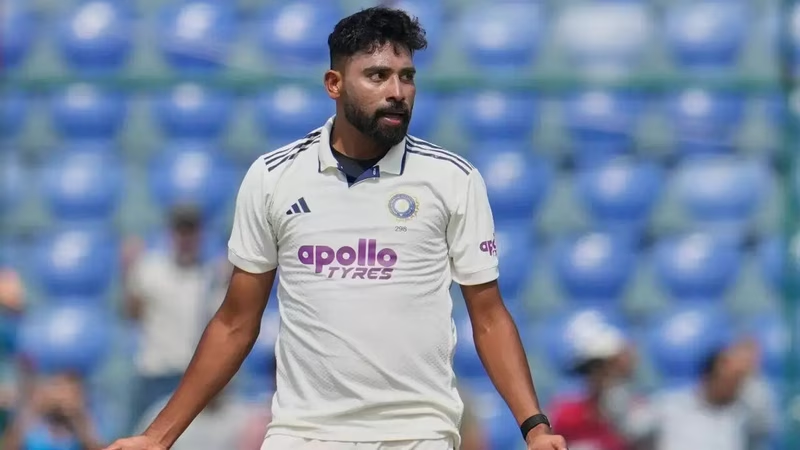
For athletes like Mohammed Siraj, time isn’t just money—it’s recovery, preparation, and family. So when the Indian pacer found himself stranded at Lokpriya Gopinath Bordoloi International Airport in Guwahati for over six hours with no clear answers, his frustration boiled over. In a now-viral social media post, Siraj branded his ordeal with Air India Express as the “worst airline experience” of his life—a rare public outburst that quickly sparked national conversation about athlete welfare and airline accountability .
The incident, which occurred in late November 2025, saw Siraj’s scheduled evening flight from Guwahati to Hyderabad abruptly canceled without timely communication. With no alternative arrangements or on-ground support, the fast bowler—fresh off a grueling Test series—was left waiting endlessly in a terminal with minimal amenities. Within 24 hours, Air India Express issued an apology, citing “unforeseen operational reasons,” but for Siraj and many frequent flyers, the damage was already done.
Table of Contents
- What Happened: The Siraj Air India Incident
- Siraj’s Public Response and Fan Backlash
- Air India Express Apology: What’s in It?
- Broader Issues: Athlete Travel in India
- How Other Cricketers Have Been Affected
- What Needs to Change
- Conclusion
- Sources
What Happened: The Siraj Air India Incident
According to reports, Siraj was scheduled to fly from Guwahati to Hyderabad on the evening of November 25, 2025, following India’s home Test series against South Africa . The flight—operated by Air India Express, a subsidiary of the national carrier—was canceled without prior notice. Passengers, including Siraj, received no updates for nearly three hours.
When airline staff finally addressed the crowd, they cited “technical and operational constraints” but offered no immediate rebooking options or hotel accommodations. Siraj, visibly exhausted, posted a candid video showing the chaotic terminal and empty information desks. “This is the worst experience I’ve ever had with any airline,” he said, his voice thick with disappointment .
Siraj’s Public Response and Fan Backlash
Siraj’s post resonated instantly. Within hours, it garnered over 500,000 likes and thousands of comments from travelers sharing similar experiences. Fans accused Air India Express of ignoring high-profile passengers and general customers alike.
“If this happens to a national cricketer, imagine what regular passengers go through,” one user commented. Others pointed to a pattern of service issues since the airline’s post-privatization restructuring under Tata Group ownership.
Air India Express Apology: What’s in It?
Facing mounting criticism, Air India Express issued a formal statement the next day: “We deeply regret the inconvenience caused to Mr. Mohammed Siraj and all passengers… The cancellation was due to unforeseen operational reasons beyond our control. We are committed to assisting affected travelers with rebooking and care.”
While the apology acknowledged the lapse, it stopped short of explaining why communication failed or why contingency protocols weren’t activated—standard practice for international carriers during disruptions.
Broader Issues: Athlete Travel in India
This isn’t just about one flight—it’s about systemic gaps in how elite athletes are treated during domestic transit. Unlike in countries like Australia or England, where national teams often travel on chartered or priority commercial flights, Indian cricketers frequently rely on regular bookings, even after international matches.
The BCCI does not have a formal travel partnership with any airline, leaving players vulnerable to delays, cancellations, and poor service—issues that impact their physical recovery and mental readiness.
How Other Cricketers Have Been Affected
Siraj isn’t alone:
- In 2023, Shubman Gill missed a brand event after his IndiGo flight was delayed by 5 hours.
- Smriti Mandhana once had to take a 12-hour train journey after multiple flight cancellations during the WPL season.
- Even Virat Kohli publicly complained about lost luggage on a domestic Air India flight in 2022.
These incidents highlight a recurring pain point: Indian aviation’s infrastructure hasn’t kept pace with the demands of a high-performance sports ecosystem.
What Needs to Change
Experts suggest three immediate steps:
- Dedicated athlete travel desks at major airports for national team members.
- BCCI-airline partnerships to guarantee priority rebooking and lounge access during disruptions.
- Transparent communication protocols from airlines during cancellations—especially for high-profile passengers who often represent the nation.
For more on how travel logistics affect player performance, read our feature: [INTERNAL_LINK:impact-of-travel-on-cricket-performance].
Conclusion
The Siraj Air India incident is more than a celebrity complaint—it’s a wake-up call. If India expects its athletes to compete at the highest level globally, it must ensure they’re treated with dignity and efficiency at home. Air India’s apology is a start, but real change requires structural reform, not just PR damage control. For Siraj, it was a “worst experience.” For the system, it should be a turning point.