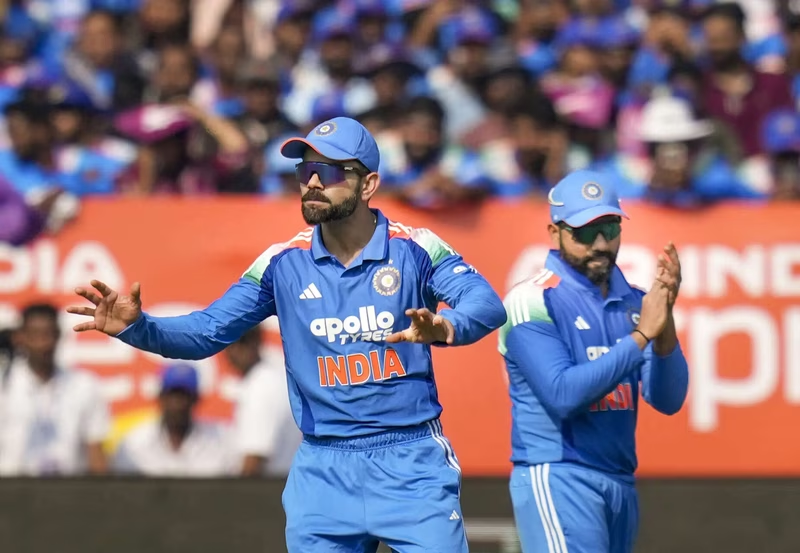
Imagine this: two of the most celebrated cricketers in the world—Virat Kohli and Rohit Sharma—step onto the field for a domestic List A match. No flashy jerseys, no billion-dollar broadcast deals, no packed international stadium. Just pure, unfiltered cricket in India’s premier domestic 50-over competition: the **Vijay Hazare Trophy**.
But here’s the twist: despite their global fame and multi-million-dollar brand endorsements, their match fee for playing in this tournament is a modest **₹60,000 per game**. That’s less than 1% of what they earn from a single T20 franchise appearance. So why do they play? And how does the **Vijay Hazare Trophy earnings** system actually work?
Table of Contents
- Vijay Hazare Trophy Earnings Explained
- Why Kohli and Sharma Play for So Little
- BCCI Domestic Payment Structure: Tiered by Experience
- Additional Income: Daily Allowance and Bonuses
- Comparing Domestic vs. International Match Fees
- The Bigger Picture: Why Domestic Cricket Matters
- Conclusion
- Sources
Vijay Hazare Trophy Earnings Explained
The **Vijay Hazare Trophy earnings** are governed by a standardized payment structure set by the Board of Control for Cricket in India (BCCI). Unlike franchise leagues such as the IPL, where star power directly translates to massive paychecks, domestic cricket operates on a principle of fairness and experience—not fame.
According to official BCCI guidelines, all senior-most players—regardless of whether they’re World Cup winners or uncapped domestic stars—receive the same match fee if they fall under the same experience tier. For players with more than five years of domestic experience, like Kohli and Sharma, that fee is **₹60,000 per match** in the Vijay Hazare Trophy .
This flat-rate system ensures that emerging talents aren’t overshadowed by superstars in terms of remuneration, fostering a more level playing field across India’s vast cricketing ecosystem.
Why Kohli and Sharma Play for So Little
At first glance, it seems baffling. Why would two icons of modern cricket, who command crores in brand deals and IPL contracts, agree to play for a fraction of their usual earnings?
The answer lies in their commitment to the game—and perhaps, to their own conditioning.
- Match Practice: Both players often return to domestic cricket after injury breaks or before major international assignments to regain rhythm. The competitive intensity of the Vijay Hazare Trophy offers real-match pressure that nets or intra-squad games can’t replicate.
- Team Loyalty: Kohli represents Delhi, and Rohit plays for Mumbai—a legacy dating back to their teenage years. Playing for their home state is a matter of pride, not pay.
- Setting an Example: Their presence elevates the tournament’s prestige, inspires young players, and reinforces the message that domestic cricket is the backbone of Indian cricket .
As Rohit once remarked in an interview, “Domestic cricket built us. It’s only right we give back.”
BCCI Domestic Payment Structure: Tiered by Experience
The BCCI’s payment model for domestic cricket is strictly tiered based on years of service, not celebrity status. Here’s how it breaks down in the Vijay Hazare Trophy as of the 2024–25 season :
- Players with 0–2 years of experience: ₹30,000 per match
- Players with 3–5 years of experience: ₹45,000 per match
- Players with 5+ years of experience (like Kohli & Sharma): ₹60,000 per match
This system rewards longevity and consistency in domestic cricket—a quiet but crucial career path for hundreds of Indian cricketers who never make it to the national team but keep the sport thriving at the grassroots.
Additional Income: Daily Allowance and Bonuses
While the match fee is fixed, players also receive supplementary income:
- Daily Allowance (DA): ₹4,000–₹5,000 per day during the tournament, covering meals and incidental expenses.
- Team Bonuses: State associations often offer performance-based incentives. For example, reaching the quarter-finals might fetch an extra ₹25,000 per player, with larger sums for finalists and champions.
- Travel & Accommodation: Fully covered by the state cricket association.
So, while Kohli and Sharma won’t be banking on the Vijay Hazare Trophy for financial gain, the total package—including DA and potential bonuses—can add up to ₹80,000–₹1,00,000 for a short stint, depending on how far their team progresses.
Comparing Domestic vs. International Match Fees
To put things in perspective:
- Vijay Hazare Trophy (Senior Player): ₹60,000 per match
- International ODI (BCCI match fee): ₹6 lakh per match
- IPL Match (Top-tier player): ₹1.5–2 crore per season (averaging ₹6–8 lakh per match)
That means Kohli earns **10 times more** in a single ODI for India than he does in a full Vijay Hazare game. Yet, his participation sends a powerful message: domestic cricket matters.
The Bigger Picture: Why Domestic Cricket Matters
The Vijay Hazare Trophy isn’t just a tournament—it’s a proving ground. Players like Jasprit Bumrah, Mohammed Shami, and Ravichandran Ashwin all honed their skills in domestic circuits before becoming national heroes. When superstars like Kohli and Sharma choose to play, they validate that journey.
Moreover, the BCCI’s transparent, experience-based **Vijay Hazare Trophy earnings** model ensures that young cricketers see a viable (if modest) career path in domestic cricket, even without an IPL contract .
For deeper insights into India’s domestic structure, check out our guide on [INTERNAL_LINK:indian-domestic-cricket-pathway].
Conclusion
Virat Kohli and Rohit Sharma’s ₹60,000 match fee in the Vijay Hazare Trophy is a testament to their humility and respect for the game’s roots. While their **Vijay Hazare Trophy earnings** pale in comparison to their international and franchise incomes, their presence elevates the tournament’s stature and inspires the next generation. In a world obsessed with glamour and big numbers, their return to domestic cricket is a quiet but powerful act of service—one that underscores why India’s cricketing pipeline remains the envy of the world.