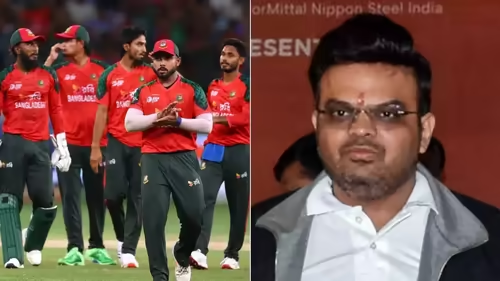
The stage is set in Dubai for a decision that could shake the very foundations of international cricket. At the heart of the storm is the Bangladesh T20 World Cup participation, now hanging by a thread after the Bangladesh Cricket Board (BCB) officially refused to send its team to India for the 2026 tournament, citing serious security concerns . With ICC Chairman Jay Shah on the ground for a crucial board meeting, the global governing body is poised to deliver what many are calling an ultimatum: play in India or face the consequences . This unprecedented standoff has not only cast a shadow over the upcoming mega-event but has also opened a complex can of worms involving geopolitics, player safety, and the integrity of the sport itself.
Table of Contents
- The Bangladesh T20 World Cup Standoff
- Why Did Bangladesh Refuse to Tour India?
- The ICC Response and Jay Shah’s Role
- What ‘Strict Action’ Could Mean for Bangladesh
- The Future of the T20 World Cup 2026
The Bangladesh T20 World Cup Standoff
The crisis began when the BCB, backed by a directive from the Bangladeshi government, announced it would not travel to India for the Bangladesh T20 World Cup matches . Their primary justification was the “safety and well-being” of their players, a claim the ICC has publicly refuted, stating it had provided all necessary security assurances . In a desperate move, Bangladesh requested that their matches be shifted to a neutral venue, specifically Sri Lanka. However, the ICC swiftly rejected this proposal, standing firm on its original schedule . This impasse has left the tournament organizers in a difficult position, with the clock ticking towards the event.
Why Did Bangladesh Refuse to Tour India?
While the official line is about security, insiders suggest the decision may have deeper roots. A significant flashpoint appears to be the recent, abrupt removal of a key Bangladeshi player from the Indian Premier League (IPL), which has reportedly soured relations between the two cricketing boards . The BCB feels this incident, coupled with a perceived hostile environment, creates an unacceptable risk for their national team. The Bangladeshi sports adviser has been unequivocal, stating, “It is the government’s decision not to play in India due to security concerns,” leaving little room for negotiation . This political dimension has elevated the issue beyond a simple sporting dispute.
The ICC Response and Jay Shah’s Role
The ICC’s response has been one of firm resolve. The board has made it clear that the tournament schedule is sacrosanct and that any team refusing to participate as planned will face severe repercussions. Currently, ICC Chairman Jay Shah is in Dubai, where a final, decisive board meeting is underway to determine Bangladesh’s fate . Sources close to the meeting indicate that the board is united in its stance, with a strong consensus building around taking ‘strict action’ if Bangladesh does not reverse its decision . Shah’s leadership is being tested in this high-stakes scenario, as he must balance the need for a strong, unified global tournament against the legitimate, if contested, concerns of a full member nation.
What ‘Strict Action’ Could Mean for Bangladesh
The term ‘strict action’ is not just a warning; it carries very real and immediate consequences. The most likely outcome, should Bangladesh hold its ground, is a complete ban from the T20 World Cup 2026. In such a scenario, the ICC has already identified Scotland as the team ready to step in and take Bangladesh’s place in the tournament bracket . This would be a massive blow to Bangladesh cricket, depriving its players of a major global platform and its fans of a much-anticipated contest. Beyond the immediate tournament, it could also lead to financial penalties and a potential review of Bangladesh’s status within the ICC’s future event planning. For more on how the ICC governs its events, you can refer to the official ICC Governance documents.
The Future of the T20 World Cup 2026
Regardless of the final decision, the Bangladesh T20 World Cup controversy has exposed a critical vulnerability in the global cricket calendar. It highlights the fragility of international sport when it intersects with complex political and security dynamics. If Bangladesh is replaced, the tournament will go on, but questions about its legitimacy and the precedent it sets will linger. If a last-minute compromise is found, it will require immense diplomatic effort and a restoration of trust between all parties involved. One thing is certain: the decisions made in that Dubai boardroom will have far-reaching implications for the sport for years to come. For a deeper look at the history of the tournament, see our guide on [INTERNAL_LINK:t20-world-cup-history].
Potential Outcomes of the ICC Decision
- Bangladesh Reverses Decision: Team tours India, tournament proceeds as scheduled.
- Bangladesh Banned: Scotland replaces them in the T20 World Cup 2026.
- Partial Sanctions: Bangladesh participates but faces fines or other penalties.
- Legal Dispute: The matter escalates to the ICC’s dispute resolution mechanism.
Conclusion
The drama surrounding the Bangladesh T20 World Cup participation is more than just a scheduling conflict; it’s a defining moment for international cricket governance. The ICC, under Jay Shah’s chairmanship, is faced with a choice between upholding the integrity of its flagship event and accommodating the political realities of its member nations. While the immediate focus is on who will play in the 2026 tournament, the long-term impact on the sport’s unity and its ability to navigate geopolitical tensions will be the true legacy of this crisis. Fans around the world will be watching the announcement from Dubai with bated breath.
Sources
- Times of India: ICC considers ‘strict action’ against Bangladesh; Jay Shah in Dubai for final decision
- Various news reports cited as through in the content.