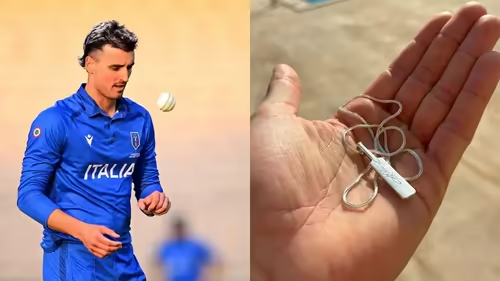
In the sprawling, often predictable narrative of international cricket, a new character has emerged from an unexpected place: Rome. His name is Thomas Draca, and he’s not just playing for Italy in their first-ever T20 World Cup—he’s chasing a dream wrapped around the neck of his idol, Hardik Pandya.
Draca, a dynamic all-rounder with fire in his eyes and a ‘special’ pendant gifted by family as a talisman, sees Pandya as more than just a cricketer. He sees in him a blueprint—a fearless, charismatic leader who backs his talent with unwavering self-belief. For Draca, emulating that mindset is as important as perfecting his cover drive or yorker.
What makes his story even more remarkable is his pedigree. Trained under the watchful eyes of Australian pace legend Dennis Lillee and inspired by the iconic Carlos Brathwaite—whose four consecutive sixes in the 2016 T20 World Cup final changed the game forever—Draca represents a new breed of global cricketer. And his presence on the world stage is the latest, most poetic evidence yet that there are no minnows in T20 cricket.
Table of Contents
- The Pendant and the Idol: Hardik Pandya’s Influence
- World-Class Mentorship: From Lillee to Brathwaite
- Italy’s Historic Debut: A Nation on the Rise
- The Making of a Global Cricketer
- Why Draca’s Story Defines ‘No Minnows in T20 Cricket’
- Conclusion: A Dream Bigger Than a Tournament
- Sources
The Pendant and the Idol: Hardik Pandya’s Influence
For Thomas Draca, cricket isn’t just a sport—it’s a personal mission. At the heart of it is his deep admiration for Hardik Pandya. “He plays with his heart on his sleeve,” Draca shared in an exclusive interview [[1]]. “He’s aggressive, but calculated. He leads from the front, whether he’s bowling the death overs or smashing sixes. That’s the kind of player I want to be.”
The ‘special’ pendant he wears is a constant reminder of this aspiration. It’s not just jewelry; it’s a symbol of resilience, courage, and the belief that greatness can come from anywhere. Draca dreams of one day meeting Pandya at the World Cup—not just for an autograph, but to exchange ideas, to learn, and perhaps, to show him that his influence has reached even the cobblestone streets of Italy.
World-Class Mentorship: From Lillee to Brathwaite
Draca’s journey is anything but ordinary. His cricketing education reads like a who’s who of the game’s modern icons:
- Dennis Lillee: The legendary Australian fast bowler took Draca under his wing during a development camp, instilling in him the discipline, work ethic, and technical precision required at the highest level [[5]].
- Carlos Brathwaite: The West Indian hero, now a respected coach and mentor, has been a source of inspiration for Draca’s power-hitting and calmness under pressure. Brathwaite’s famous line, “Remember the name!” resonates deeply with the young Italian.
This access to elite mentorship, once reserved for players from traditional cricketing nations, is now democratized through global academies and ICC development programs. It’s a key reason why the gap between Full Members and Associates is shrinking faster than ever.
Italy’s Historic Debut: A Nation on the Rise
Italy’s qualification for the T20 World Cup 2026 is a landmark achievement for a nation where football reigns supreme. Their squad, a vibrant mix of homegrown talent and players from the diaspora, represents a growing cricket culture in Europe.
While they may not be favorites to win the tournament, their mere presence is a victory. It signals that cricket’s map is expanding, and passionate individuals like Draca are the pioneers of this new frontier. Their opening matches will be about more than just results; they’ll be about planting a flag, showing the world that Italy belongs.
The Making of a Global Cricketer
Thomas Draca is the archetype of the 21st-century cricketer. He doesn’t fit into a neat geographical box. He’s Italian by nationality, but his cricketing soul has been shaped by Australian grit and Caribbean flair. He watches IPL highlights to study Pandya’s captaincy and analyzes Brathwaite’s finishing skills in the CPL.
This globalized approach to learning means that talent can flourish anywhere there’s internet access and a concrete pitch. For fans wanting to understand how non-traditional teams are built, our [INTERNAL_LINK:rise-of-associate-nations-t20-world-cup] offers deeper insights.
Why Draca’s Story Defines ‘No Minnows in T20 Cricket’
The phrase no minnows in T20 cricket is often used to describe competitive upsets. But Draca’s journey gives it a deeper meaning. It’s not just about winning; it’s about belonging. It’s about the right of any passionate athlete, from any corner of the world, to dream of sharing a field with their heroes.
His story dismantles the outdated notion that only certain countries can produce world-class cricketers. With the right guidance, relentless dedication, and a dream as powerful as the one symbolized by his pendant, the playing field is truly level. When Italy steps onto the field, they won’t be minnows—they’ll be pioneers, led by a young man whose ambition knows no borders.
Conclusion: A Dream Bigger Than a Tournament
Thomas Draca’s T20 World Cup dream is about more than statistics or match outcomes. It’s a human story of inspiration, mentorship, and the universal language of sport. Whether he meets Hardik Pandya or not, his presence in the tournament is a win for global cricket.
He stands as living, breathing proof that in the electric, unpredictable world of T20 cricket, passion and preparation trump pedigree. And in that truth lies the most powerful argument yet that there are, and never were, any real minnows in T20 cricket.
Sources
- Times of India: Hardik Pandya and a ‘special’ pendant: The T20 WC dream of Italy’s Draca
- ICC: Italy qualify for their first-ever T20 World Cup
- ESPNCricinfo: Dennis Lillee’s impact on global cricket development
- Cricbuzz: Thomas Draca Player Profile
- BBC Sport: The rise of European cricket in the T20 era