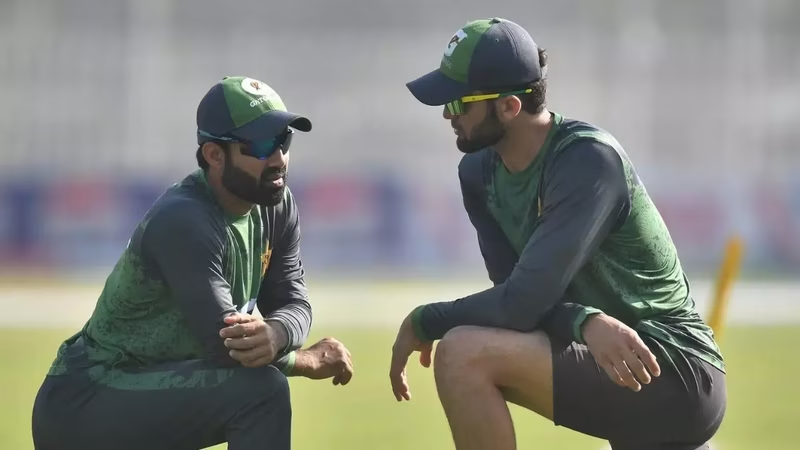
Shaheen Afridi Steps Up: A New Era for Pakistan Cricket Begins
In a heartfelt and revealing statement, Pakistan’s premier fast bowler Shaheen Afridi has broken his silence on the recent leadership shake-up in the national team. Confirming he took over the ODI captaincy only after Mohammad Rizwan voluntarily stepped down, Afridi described his predecessor as a “good human” and emphasized that his leadership will be rooted in collaboration, humility, and collective responsibility .
This transition marks a pivotal moment for Pakistan cricket as it rebuilds following a disappointing Champions Trophy 2025 campaign and prepares for the long road to the ICC Men’s ODI World Cup 2027. With raw emotion and strategic clarity, Afridi isn’t just accepting a role—he’s redefining what Pakistani captaincy can look like in the modern era.
Table of Contents
- Rizwan Steps Down Voluntarily—A Class Act
- Shaheen Afridi’s Leadership Philosophy
- Why Collaboration Is Key for Pakistan’s Revival
- Backing Players—In Form and Out of Form
- The Road to the 2027 World Cup: Shaheen’s Vision
- Historical Context: Pakistan’s Captaincy Rollercoaster
- Fan Reactions and Expert Views
- Conclusion: Leadership Rooted in Respect
- Sources
Rizwan Steps Down Voluntarily—A Class Act
Contrary to rumors of a forced removal, Shaheen clarified that Rizwan made the decision to relinquish the ODI captaincy on his own terms. “He’s a good human,” Afridi said, highlighting Rizwan’s selflessness and team-first attitude. “He felt it was the right time for someone else to lead, and he told the board himself.”
This act of grace has drawn praise across the cricketing world, especially in a sport where leadership transitions are often marred by bitterness. Rizwan will continue as a key batter in all formats, and Afridi stressed that his experience remains invaluable to the squad.
Shaheen Afridi’s Leadership Philosophy
At just 25, Afridi is one of the youngest captains in Pakistan’s recent history—but his approach is anything but impulsive. He’s committed to a collaborative leadership model that draws on diverse voices:
- Regular consultations with senior players like Babar Azam and Imam-ul-Haq
- Seeking guidance from former captains including Misbah-ul-Haq and Younis Khan
- Holding open team meetings to encourage honest feedback
“I don’t have all the answers,” Afridi admitted. “But together, we can find them.”
Why Collaboration Is Key for Pakistan’s Revival
Pakistan cricket has long struggled with inconsistency—brilliant one day, baffling the next. Experts like former selector Haroon Rasheed argue that fragmented leadership and ego clashes have often derailed progress .
Afridi’s emphasis on unity isn’t just rhetoric; it’s a direct response to past failures. By fostering psychological safety within the squad, he aims to create an environment where players take ownership of both wins and losses—without fear of scapegoating.
Backing Players—In Form and Out of Form
One of Afridi’s most striking promises is his commitment to supporting all players—even those going through lean patches. “Cricket is a game of confidence,” he said. “If someone’s struggling, we lift them. Not drop them at the first mistake.”
This stance is particularly significant given Pakistan’s recent tendency to rotate players aggressively after minor dips in form. Afridi’s approach could stabilize the middle order and give talents like Saud Shakeel or Agha Salman the runway they need to flourish.
The Road to the 2027 World Cup: Shaheen’s Vision
Afridi didn’t shy away from naming his ultimate goal: leading Pakistan to glory in the 2027 ODI World Cup, co-hosted by South Africa, Zimbabwe, and Namibia. “That’s the dream,” he said. “And we start building for it now—in every series, every training session.”
With a core of young stars (including Naseem Shah and Arshad Nadeem in supporting roles) and experienced campaigners, Pakistan has the raw talent. What’s been missing is consistent leadership—and Afridi seems determined to fill that void.
Historical Context: Pakistan’s Captaincy Rollercoaster
Since Imran Khan’s iconic 1992 World Cup win, Pakistan has cycled through over 15 captains across formats—often with abrupt changes and minimal succession planning. The PCB’s tendency to conflate on-field results with leadership competence has created instability.
Afridi’s appointment, however, feels different. It’s not a panic move after a loss—it’s a planned transition backed by player consensus. If sustained, it could mark the beginning of a more mature cricketing culture.
Fan Reactions and Expert Views
On social media, Pakistani fans have largely welcomed Afridi’s appointment, citing his passion, work ethic, and emotional intelligence. Cricket analyst Osman Samiuddin noted, “Shaheen leads with his heart—but he’s learning to lead with his head too.”
Conclusion: Leadership Rooted in Respect
Shaheen Afridi captaincy isn’t just about tactics or team sheets—it’s about restoring trust, dignity, and collective purpose to Pakistan cricket. By honoring Rizwan’s legacy while forging his own path, Afridi has set a tone of respect that the team desperately needs.
As Pakistan prepares for its upcoming ODI series against Sri Lanka and beyond, the world will be watching not just for sixes and wickets—but for signs of a new, more united era under a leader who believes the team is greater than any one individual.
For more on Pakistan’s leadership evolution, explore our feature on [INTERNAL_LINK:pakistan-cricket-captains-history].