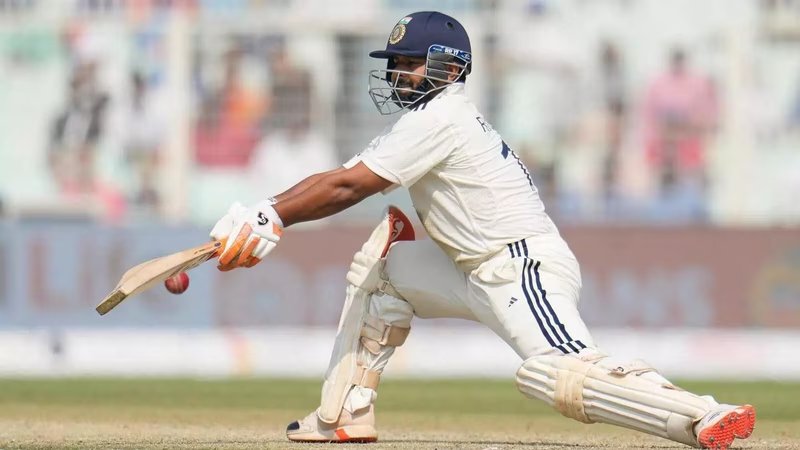
In the wake of India’s shocking 0–2 home defeat to South Africa in the 2025 Test series, veteran off-spinner Ravichandran Ashwin has broken his silence—with a sharp, no-holds-barred critique of Rishabh Pant’s shot selection. During a candid post-series reflection, Ashwin didn’t mince words: “My heartbeat used to go fast” watching Pant’s reckless strokes, he revealed—highlighting a growing concern among fans and experts alike about the wicketkeeper-batter’s approach under pressure .
While acknowledging Pant’s undeniable talent and match-winning ability, Ashwin stressed that his ultra-attacking style isn’t always appropriate—especially when the team is fighting to stay competitive in a high-stakes Test match . This public commentary marks a significant moment in a season already fraught with leadership transitions and tactical missteps for Team India.
Table of Contents
- What Ashwin Said About Pant’s Approach
- The Context of India’s Series Collapse
- Pant as Captain: A Mixed Bag
- Broader Criticisms and Fan Reactions
- What Next for Pant and Indian Cricket?
- Conclusion
- Sources
What Ashwin Said About Pant’s Approach
Ashwin’s critique centers on what he sees as a lack of situational awareness in Pant’s batting. “I have said it in the dressing room,” Ashwin admitted, referring to his long-standing concerns about Pant’s tendency to play high-risk shots even when the match demands caution . He emphasized that while Pant’s fearless style has won games in the past—like his legendary knocks at Gabba and Nottingham—it can be counterproductive when used indiscriminately.
“There’s a time to attack, and there’s a time to absorb pressure,” Ashwin noted, urging the 27-year-old to take more responsibility, especially as a senior player and occasional leader . The comment comes not from malice, but from a place of mentorship—Ashwin has often praised Pant’s raw talent and fighting spirit in previous interviews.
The Context of India’s Series Collapse
India’s whitewash at home—their first in a Test series since 2015—was as unexpected as it was devastating. South Africa, led by a resurgent pace attack and disciplined batting, outplayed India in all departments. In both Tests, India collapsed in crucial phases, often in response to key top-order wickets.
In the second Test in Guwahati, Pant walked in during a fragile middle-order situation. Instead of stabilizing the innings, he played “a bit too recklessly,” as noted by other commentators like Anil Kumble . His dismissal—caught behind off a loose drive—epitomized the very recklessness Ashwin lamented .
Pant as Captain: A Mixed Bag
With Rohit Sharma and Jasprit Bumrah rested, Pant assumed the captaincy for this series—a role that comes with immense tactical and emotional responsibility. Ashwin hinted that Pant’s tactical decisions, including field placements and bowling changes, may have also contributed to India’s slippage, particularly on Day 3 of the second Test .
Captaincy isn’t just about leading by example with the bat; it’s about shielding the team from unnecessary risks. When a skipper throws his wicket away on 12 chasing quick runs in a 350+ pitch chase, it sends mixed signals to the dressing room—especially to younger players like Yashasvi Jaiswal or Dhruv Jurel .
Broader Criticisms and Fan Reactions
Ashwin isn’t alone in his concerns. Former Pakistan all-rounder Ijaz Ahmed and ex-India selector Saba Karim have also questioned Pant’s decision-making under pressure . Fans on social media have been split: some defend his “entertaining” style, while others echo Ashwin’s call for maturity and match awareness.
Even Pant’s body language came under scrutiny. Ashwin observed that his on-field demeanor during the series lacked the usual fire and fight that fans associate with him—calling it “heartbreaking” to watch a player of his caliber look so subdued .
What Next for Pant and Indian Cricket?
This series loss is a wake-up call—not just for Pant, but for the entire Indian setup. With the World Test Championship cycle heating up and tough tours to Australia and England on the horizon, India needs batters who can adapt, not just dominate.
For Pant, the path forward lies in balance: retaining his natural aggression while learning when to rein it in. For selectors, it’s about ensuring that leadership roles aren’t handed out lightly—especially in experimental series against top-tier opponents.
As we analyze India’s Test strategy, don’t miss our deep-dive guide on [INTERNAL_LINK:test-cricket-batting-technique-under-pressure].
Conclusion
Ravichandran Ashwin’s comments on Ashwin on Pant aren’t just criticism—they’re a plea for growth. In a team transitioning between generations, senior players like Pant must evolve from entertainers to responsible leaders. His talent is unquestioned; now, it’s time for his judgment to catch up. The future of Indian Test cricket may well depend on it.