In the wake of India’s shocking 0–2 home whitewash by South Africa—their first such defeat on home soil in nearly four decades—the cricketing nation expected sweeping changes. Coaching overhauls. Emergency selection meetings. Public reprimands. But the BCCI long-term plan remains unwavering.
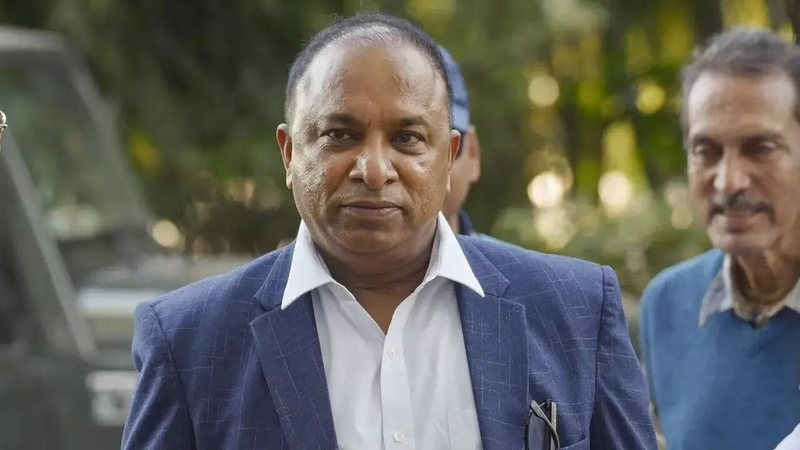
BCCI Secretary Devajit Saikia has delivered a clear, calm message: “No knee-jerk reactions.” Speaking to the media in New Delhi, Saikia acknowledged the pain of the loss but emphasized that India is in a deliberate transition phase following the gradual exits of senior stalwarts like Virat Kohli (from Tests), Rohit Sharma (partial retirement), and the evolving role of key players like Ravichandran Ashwin .
More strikingly, Saikia pointed to a deeper issue: Indian batters’ growing discomfort against spin—on home pitches. This paradox, he argues, demands introspection, not panic. Let’s unpack what the BCCI’s steady hand means for the future of Indian Test cricket.
Table of Contents
- BCCI Long-Term Plan: What Saikia Said
- The Spin Paradox: Indian Batters at Home
- Why Five-Day Wickets Matter
- The Transition Phase Explained
- Critics vs. Board Philosophy
- What Next for Indian Cricket?
- Conclusion
- Sources
BCCI Long-Term Plan: What Saikia Said
“We are in a phase of transition,” Saikia stated plainly. “This was always going to involve short-term turbulence.” He stressed that resting senior players like Rohit Sharma and Jasprit Bumrah for the South Africa series wasn’t complacency—it was a strategic investment in the next generation .
While fans and pundits called for immediate shake-ups, the BCCI is resisting. “Cricket isn’t governed by emotion,” Saikia noted. “It’s governed by vision.” That vision includes building a squad capable of winning in 2027—not just patching holes for 2025.
The Spin Paradox: Indian Batters at Home
Perhaps the most alarming takeaway from the series wasn’t the loss—it was how India lost. South Africa’s spinners (Keshav Maharaj and Simon Harmer) dominated on Indian pitches, while India’s own batters looked clueless against turning deliveries—in their own backyard.
“Our batters must learn to play spin in all conditions,” Saikia said, highlighting a troubling trend: Indian players are increasingly reliant on flat, batting-friendly tracks in domestic cricket, leaving them unprepared for variable turn and bounce .
This isn’t just about technique—it’s about mindset. As former selector Saba Karim noted, “If you can’t handle spin at home, how will you survive in Sri Lanka or Bangladesh?”
Why Five-Day Wickets Matter
Saikia also took a firm stand on pitch preparation: “The ideal Test wicket is one that lasts five days.” He criticized the recent trend of pitches offering excessive turn or pace from Day 1, arguing it undermines the essence of Test cricket—a format built on endurance, strategy, and evolving contests.
While the WACA-style Perth pitch (rated “very good” by ICC despite a 2-day finish) and Eden Gardens’ spin tracks spark debate, Saikia believes Indian pitches should aim for balance: enough assistance for bowlers early on, but durability for meaningful fourth- and fifth-day battles.
The Transition Phase Explained
The BCCI’s “transition” isn’t vague—it’s structured:
- Leadership handover: Shubman Gill and Rishabh Pant are being groomed as core leaders.
- Batting rebuild: Yashasvi Jaiswal, Dhruv Jurel, and Rajat Patidar are getting extended runs.
- Bowling depth: Focus on developing pace all-rounders like Washington Sundar and spin backups.
This strategy accepts that losses may occur—but aims for long-term resilience over short-term wins.
Critics vs. Board Philosophy
Not everyone agrees. Commentators like Sanjay Manjrekar argue that “transition” shouldn’t mean surrendering home advantage. “You can rebuild and still win,” he said on air .
But the BCCI’s stance finds support in global trends. England’s “Bazball” revolution was built on short-term chaos for long-term gain. Australia cycled through captains before Pat Cummins stabilized the ship. The question is: does India have the patience—and the talent pipeline?
What Next for Indian Cricket?
The true test comes in Australia (Jan–Feb 2026). If India’s young core collapses again, the “long-term plan” may face real pressure. But if they show grit—even in defeat—the board’s patience could pay off.
Meanwhile, domestic cricket is under scrutiny. Expect the BCCI to push for more five-day Ranji Trophy matches on challenging pitches to better prepare batters.
For a deep dive into India’s rebuilding strategy, see our analysis: [INTERNAL_LINK:india-cricket-transition-phase-2025-2027].
Conclusion
The BCCI’s refusal to panic after a humiliating home defeat is either admirable discipline or dangerous denial—depending on your perspective. But one thing is clear: the BCCI long-term plan is not about quick fixes. It’s about building a team that can win not just at home, but everywhere, for years to come. Whether that vision survives the pressure of fan expectations and future results remains to be seen.