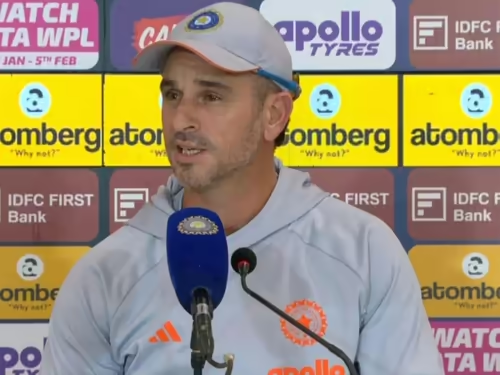
A fiery controversy has erupted within the Indian cricket ecosystem, and at its heart is a pointed critique from one of its most respected domestic stalwarts. Priyank Panchal, the former Gujarat captain and a veteran of the Ranji Trophy circuit, has publicly lambasted Team India’s assistant coach, Ryan ten Doeschate, for what he describes as “terrible comments” regarding captain Rohit Sharma and young all-rounder Nitish Kumar Reddy .
Panchal’s outburst isn’t just about a few ill-chosen words; it’s a direct challenge to the entire philosophy of importing foreign coaching talent without ensuring they grasp the unique cultural and emotional fabric of Indian cricket. His comments have ignited a crucial debate on respect, communication, and the delicate balance between technical expertise and cultural sensitivity at the highest level of the game.
Table of Contents
- The Controversial Comments That Started It All
- Priyank Panchal’s Scathing Response
- The Bigger Debate: Do Foreign Coaches Truly Understand Indian Cricket?
- Why Cultural Sensitivity is Non-Negotiable in the Indian Dressing Room
- Conclusion: A Wake-Up Call for Team Management
- Sources
The Controversial Comments That Started It All
The controversy stems from public remarks made by assistant coach Ryan ten Doeschate, where he appeared to question the on-field contributions of both Rohit Sharma and Nitish Kumar Reddy. While the exact phrasing has been widely reported as dismissive, the sentiment was interpreted as suggesting that their efforts were insufficient or lacking in impact .
For a team that prides itself on its senior leadership and the nurturing of young talent, such comments—especially from a support staff member—were bound to cause ripples. The timing, during a high-stakes series against New Zealand, only added fuel to the fire, making the situation a major talking point beyond just the boundary ropes.
Priyank Panchal’s Scathing Response
Priyank Panchal did not hold back. In a strongly worded statement, he called ten Doeschate’s remarks “terrible” and used the incident to highlight a recurring issue . He questioned the credentials and background of some foreign coaches, implying that those with less impressive playing careers might lack the necessary authority and perspective to critique established Indian stars .
His most damning indictment was a blunt observation: “There’s a reason foreign coaches don’t succeed in India” . This statement cuts to the core of a long-standing discussion in Indian cricket circles. Panchal argued that success in India requires more than just tactical knowledge; it demands an innate understanding of the players’ psyche, the immense pressure from a billion fans, and the deep-rooted respect for seniority and legacy within the team structure .
The Bigger Debate: Do Foreign Coaches Truly Understand Indian Cricket?
Panchal’s comments have reignited a familiar debate. While foreign coaches like Gary Kirsten and Duncan Fletcher enjoyed successful tenures, others have struggled to connect with the team. The key differentiator, many argue, is their ability to adapt and show genuine respect for the local cricketing culture.
Critics of the current setup suggest that a coach’s role is not just to instruct but to mentor and inspire. When a coach’s public commentary appears to undermine a legendary figure like Rohit Sharma or a promising youngster like Nitish Reddy, it can be deeply demoralizing and counterproductive. It raises serious questions about the vetting process for such high-profile roles and the communication protocols within the team management.
Why Cultural Sensitivity is Non-Negotiable in the Indian Dressing Room
Indian cricket is a unique beast. It’s a blend of immense passion, complex hierarchies, and a rich history that commands reverence. A coach, whether domestic or foreign, must navigate this landscape with extreme care.
Here’s why cultural sensitivity is paramount:
- Respect for Legacy: Players like Rohit Sharma are not just athletes; they are icons who have carried the nation’s hopes for over a decade. Public criticism, even if constructive, can be seen as a sign of disrespect.
- Nurturing Young Talent: For a player like Nitish Kumar Reddy, a harsh public comment from a senior coach can be a massive confidence blow at a critical stage in his career.
- Team Unity: The dressing room is a sanctuary. Public airing of grievances or critiques from within the support staff can fracture the unity and trust that is essential for peak performance.
As Panchal’s intervention suggests, the Indian team needs coaches who are not just tacticians but also empathetic leaders who understand the soul of Indian cricket .
Conclusion: A Wake-Up Call for Team Management
Priyank Panchal’s public rebuke of Ryan ten Doeschate is more than just a personal opinion; it’s a wake-up call for the BCCI and the entire Team India management. It underscores a critical need to ensure that every member of the coaching staff, regardless of their passport, possesses not only world-class expertise but also a profound respect for the cultural and emotional dynamics of the Indian team.
The focus must shift from merely hiring big names to finding individuals who can build bridges, not walls. In the high-pressure world of international cricket, a coach’s words carry immense weight. They must be chosen with wisdom, delivered with empathy, and always aligned with the spirit of the game and the team they serve. The “terrible comments” saga should serve as a powerful lesson in the importance of getting this balance right.