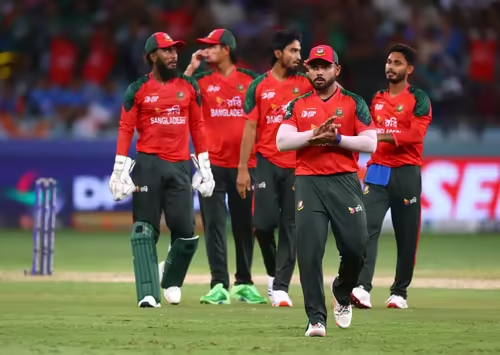
The writing was on the wall, but the Bangladesh Cricket Board (BCB) made one final, desperate play. In a last-ditch effort to avoid being booted out of the T20 World Cup 2026, they filed an appeal with the ICC’s Dispute Resolution Committee (DRC). The problem? The DRC simply doesn’t have the authority to overturn a decision that has already been ratified by the ICC’s main Board. This legal maneuver has now officially hit a dead end, clearing the path for Scotland to step into the global spotlight as Bangladesh’s replacement . The saga surrounding the Bangladesh T20 World Cup participation has moved from a political standoff to a procedural conclusion, leaving fans and players alike stunned by the finality of it all.
Table of Contents
- The Bangladesh T20 World Cup Deadlock
- Why the BCB’s DRC Appeal Was a Non-Starter
- Scotland’s Ready to Step In
- The Political Roots of the Dispute
- What This Means for the Future of International Cricket
The Bangladesh T20 World Cup Deadlock
The crisis began when Bangladesh’s interim government, citing unverified security concerns, directed the BCB not to send its national team to India for their scheduled matches in the T20 World Cup 2026 . The ICC, which had long ago approved India as the official host and provided comprehensive security assurances, stood firm. They rejected Bangladesh’s request to move their matches to a neutral venue like Sri Lanka, stating that the tournament schedule was non-negotiable . This created an impossible situation: a full member nation refusing to participate in a flagship ICC event. The Bangladesh T20 World Cup spot was suddenly in jeopardy, and the clock was ticking.
Why the BCB’s DRC Appeal Was a Non-Starter
Faced with the ICC Board’s unwavering stance, the BCB turned to the Dispute Resolution Committee as a final hope. However, this move was fundamentally flawed from the start. The DRC’s mandate is to resolve commercial or contractual disputes between members, not to challenge or override policy decisions made by the ICC’s supreme governing body—the Board itself . The venue for a World Cup is a strategic and logistical decision ratified at the highest level, far outside the DRC’s jurisdiction. By filing this appeal, the BCB appeared to be grasping at straws, either out of genuine desperation or a hope that the process itself might buy them more time. That strategy has now completely backfired, leaving them with no remaining legal or procedural avenues to contest the decision.
Scotland’s Ready to Step In
While Bangladesh was fighting a losing battle in committee rooms, Scotland had been preparing for this exact scenario. As the next team in line based on the ICC’s qualification pathway, they have been on high alert, keeping their squad match-fit and ready to go at a moment’s notice . Their inclusion would be a massive boost for Scottish cricket, offering a rare chance to compete on the sport’s biggest stage against the world’s best. For fans, it promises a fresh and exciting narrative in the tournament. Scotland’s previous appearances in World Cups have been marked by passionate performances and a giant-killing spirit, and they will be eager to make the most of this unexpected opportunity. You can learn more about the ICC’s official playing conditions and regulations on their website at ICC Playing Conditions.
The Political Roots of the Dispute
At its core, this isn’t just a cricketing issue; it’s a deeply political one. The decision by Bangladesh’s government to bar its team from touring India appears to be influenced by a complex web of bilateral tensions, far beyond the boundary ropes. A key flashpoint was the recent, controversial removal of a prominent Bangladeshi player from the Indian Premier League (IPL), which many in Dhaka saw as a slight against their nation . This incident seems to have poisoned the well of sporting diplomacy, turning a routine international tour into a matter of national pride and security. The BCB, caught between its government and the ICC, found itself in an impossible position, ultimately forced to follow a political directive that has now cost its team a place in a major global tournament.
What This Means for the Future of International Cricket
The fallout from the Bangladesh T20 World Cup fiasco will be felt for years to come. It sets a powerful precedent: the ICC will not allow its major events to be held hostage by the political whims of its member nations. This is a necessary stance to protect the integrity and commercial viability of global tournaments. However, it also exposes a growing tension in the sport. As geopolitical rivalries intensify, the ideal of cricket as a unifying force is increasingly under threat. The message to all member boards is clear: if you want to be part of the elite club, you must be willing to play by the agreed-upon rules, regardless of the political climate at home. For a deeper look at how politics has shaped cricket history, see our feature on [INTERNAL_LINK:politics-and-cricket-rivalries].
Key Takeaways from the BCB’s Failed Appeal
- The BCB’s appeal to the DRC was procedurally invalid and destined to fail.
- Scotland is the confirmed replacement for Bangladesh in the T20 World Cup 2026.
- The root cause is political, not a genuine security assessment by the ICC.
- The ICC has sent a strong message about the sanctity of its tournament schedules.
- This event will have long-term implications for India-Bangladesh cricketing ties.
Conclusion
The dream of a Bangladesh T20 World Cup campaign in 2026 is officially over. Their last-resort legal challenge was a procedural misstep that only served to confirm their exclusion. As Scotland prepares to pack its bags for a historic tournament, Bangladesh is left to reckon with the consequences of a decision driven by politics rather than sport. This episode serves as a stark reminder that in the modern world of international cricket, the game is no longer played in a vacuum. The choices made in government chambers can have a direct and devastating impact on the field of play, and the ICC has shown it will not hesitate to enforce its rules to keep the global game moving forward.
Sources
- Times of India: T20 WC row: BCB’s DRC move hits dead end, Scotland all set to replace Bangladesh
- ICC Official Website: ICC Playing Conditions