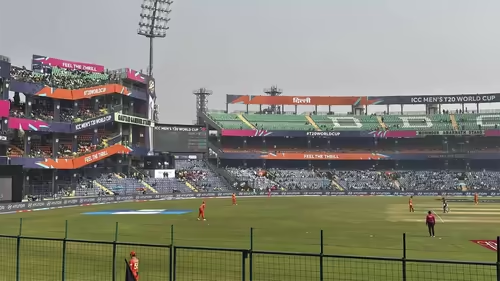
A wave of concern swept through the cricketing world this week after a disturbing video from the Arun Jaitley Stadium in Delhi went viral. The footage appeared to show a vendor collecting leftover soft drinks from discarded cups and bottles and then pouring the liquid back into empty bottles—a practice that, if true, would represent a serious breach of food safety and hygiene at a premier global event like the ICC Men’s T20 World Cup 2026 [[2]].
The public outcry was swift and severe, with fans and health advocates demanding answers. In response, the Delhi & District Cricket Association (DDCA), the body responsible for the iconic venue, has issued an official statement to quell the growing panic and clarify what actually transpired [[5]].
Table of Contents
- The Viral Video That Sparked a Global Outrage
- The DDCA’s Official Statement: Setting the Record Straight
- What Is Waste Segregation and Why It Matters
- Public Reaction and the Social Media Fallout
- Hygiene Protocols at ICC Events: What Fans Should Know
- Conclusion: A Misunderstood Protocol or a Genuine Concern?
- Sources
The Viral Video That Sparked a Global Outrage
The controversy began after the Netherlands vs. Namibia T20 World Cup match on February 10, 2026 [[3]]. A spectator captured a short clip showing a staff member of a concessionaire at the stadium collecting unused beverages from abandoned containers and transferring them into other bottles. To the untrained eye, it looked exactly like the kind of unhygienic, cost-cutting measure that no fan would ever want to see at a major sporting event [[2]].
The video spread like wildfire across social media platforms like Instagram and X (formerly Twitter), with captions warning of “refilled drinks T20 World Cup” being sold to unsuspecting customers [[1]]. The hashtag #BoycottDelhiStadium began trending, and many questioned the oversight of such a critical aspect of fan experience and safety.
The DDCA’s Official Statement: Setting the Record Straight
Facing mounting pressure, the DDCA broke its silence with a clear and direct statement. They categorically denied that any refilled drinks were being sold to the public. Instead, they explained that the activity captured in the video was part of a strictly controlled waste management and segregation process conducted by their authorized concessionaire [[5]].
“In this regard, it is clarified that pouring is undertaken by the authorised concessionaire for the stadium, in line with the event guidelines for waste segregation and disposal,” the DDCA stated [[5]].
According to the association, the vendor was not preparing drinks for resale but was instead consolidating leftover, unsold beverages for proper disposal as part of their environmental and operational protocols [[7]]. This is a common practice in large venues to manage waste streams efficiently and prevent contamination of recyclable materials.
What Is Waste Segregation and Why It Matters
Waste segregation is a standard environmental practice in modern stadiums and large public venues. It involves separating different types of waste—like plastic, paper, and organic matter—at the source to facilitate recycling and safe disposal. For liquid waste from beverages, consolidation is often necessary to prevent spills and ensure that recyclable containers are clean.
The key distinction the DDCA is making is one of intent and process:
- What Was NOT Happening: Bottles were not being cleaned and refilled with old drink to be sold again as a new product.
- What WAS Happening: Leftover, unsold drinks from various containers were being poured together into a single container solely for the purpose of disposal, keeping the recycling stream clean [[7]].
Public Reaction and the Social Media Fallout
Despite the DDCA’s explanation, public trust remains a fragile commodity. Many fans expressed skepticism, arguing that the process, even if for disposal, should be conducted out of public view to avoid exactly this kind of misunderstanding [[4]]. The incident highlights the immense scrutiny under which World Cup venues operate and how a simple operational procedure can be catastrophically misinterpreted without clear, proactive communication.
Hygiene Protocols at ICC Events: What Fans Should Know
The ICC takes food and beverage safety at its events extremely seriously. All concessionaires at World Cup venues are required to adhere to stringent local and international health and safety standards. These protocols are regularly audited to ensure compliance.
Fans attending matches at venues like the Arun Jaitley Stadium can learn more about the official standards on the [INTERNAL_LINK:T20 World Cup 2026 Fan Guide]. For a deeper look at global food safety practices, the World Health Organization provides comprehensive guidelines on safe food handling in public settings [[8]].
Conclusion: A Misunderstood Protocol or a Genuine Concern?
While the DDCA’s statement provides a logical and plausible explanation for the viral video, the incident serves as a powerful reminder of the importance of transparency and fan communication. In the age of social media, perception can often become reality faster than facts can be verified. The controversy over refilled drinks T20 World Cup may have been born from a simple waste disposal task, but it underscores the need for event organizers to be more visible and vocal about their behind-the-scenes operations to maintain the highest levels of trust and confidence among the global cricket community.
Sources
- Times of India: Refilled aerated drinks at T20 World Cup venue? DDCA issues statement [[5]]
- News18: Delhi Issues Clarification On Viral Video Of Vendor Refilling Coldrink Bottles [[7]]
- Circle of Cricket (X): DDCA breaks silence on viral video [[1]]
- Circle of Cricket (Facebook): DDCA finally spoke out after a viral video [[4]]
- Instagram Reels: Soft drinks were reused at Delhi stadium [[2]]
- World Health Organization: Food Safety Fact Sheet [[8]]